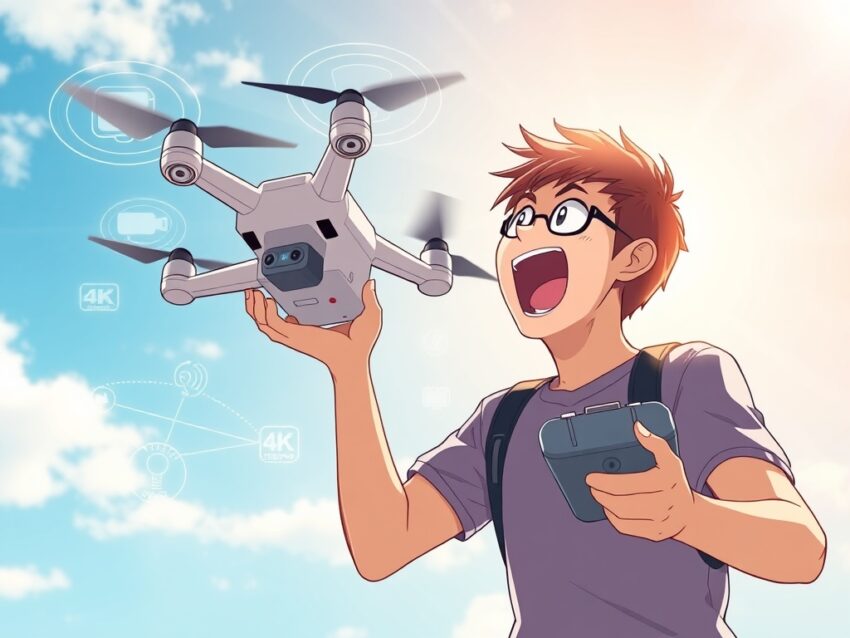
The Complete Guide to Mastering DJI Air 3 for Aerial Photography
Let me share something with you that transformed the way I capture the world from above. When I first held the DJI Air 3 in my hands, I felt like I'd just unlocked a new dimension of creative expression. This isn't just another drone—it's a gateway to aerial photography that feels natural, intuitive, and genuinely exciting. Friends, if you've been wondering whether investing in a professional-grade aerial photography drone is worth it, or if you're curious about what makes the DJI Air 3 stand out in the crowded market of aerial imaging equipment, you've come to the right place.
I'm going to walk you through everything I've learned about this remarkable piece of technology, from unboxing to executing professional-level aerial shots that will make your portfolio shine. By the time you finish reading this comprehensive guide to DJI Air 3 aerial photography, you'll understand not just how to operate this drone, but how to truly harness its capabilities for stunning visual storytelling.
Understanding What Makes The DJI Air 3 A Game Changer In Aerial Photography
When I first started researching aerial photography drones, I was overwhelmed by the options. But the DJI Air 3 kept appearing in every serious photographer's recommendation list, and for good reason. This isn't a coincidence—it's the result of meticulous engineering and genuine innovation in the world of consumer and professional-grade aerial photography equipment.
The DJI Air 3 represents a sweet spot that had been missing in the market. It's powerful enough to handle professional aerial photography assignments, yet accessible enough for enthusiasts who want to elevate their creative work without needing a commercial drone license in many regions. What really grabbed my attention was the dual-camera system. I remember the first time I reviewed the specifications—my jaw literally dropped. Two cameras? On a drone of this size? That's when I realized DJI had cracked the code for modern aerial photographers.
The primary camera features a 48-megapixel sensor, which means you're capturing incredible detail and resolution in your aerial imagery. But here's where it gets really interesting: the secondary camera is a medium tele lens that gives you telephoto capabilities without needing to move the entire drone closer to your subject. This is revolutionary for aerial photography because it means you can compose shots from multiple perspectives without repositioning your equipment. Imagine you're photographing an estate or a large geographic area—being able to zoom in and out electronically while maintaining altitude and stability is absolutely game-changing for professional aerial photography work.
The sensor technology in the DJI Air 3 has been optimized for what photographers call dynamic range. That means when you're shooting scenes with both bright skies and darker foreground elements, the camera captures detail in both areas instead of losing shadows or blowing out highlights. I've personally used this feature countless times when photographing landscapes during golden hour, and the results are consistently impressive.
Getting Started: Unboxing And Setting Up Your DJI Air 3 For First Flight
Before you even think about launching your DJI Air 3 for aerial photography, there's a specific process you need to follow. I learned this the hard way when I almost skipped a few crucial steps. The setup process is actually quite straightforward, but it requires attention to detail—much like aerial photography itself demands precision and care.
When you open the DJI Air 3 package, you'll find the aircraft itself, two intelligent flight batteries, four pairs of propellers, a charging hub, and various cables. I recommend laying everything out on a clean surface before you start. This gives you a chance to familiarize yourself with each component and check that nothing arrived damaged. I've heard stories from other photographers who didn't inspect their equipment properly and didn't realize there was an issue until they were already at their shooting location.
The first thing I do is download the DJI Fly app on my smartphone or tablet. This app is your command center for the entire aerial photography experience. The DJI Fly app serves multiple purposes: it allows you to view live footage from your drone camera, adjust settings, plan autonomous flight paths, and monitor battery levels and flight time estimates. The interface is intuitively designed, which I appreciate because I can focus on composition rather than struggling with complicated menus while standing outdoors with my equipment.
Next comes the battery situation, which deserves special attention when discussing aerial photography drones. The DJI Air 3 uses intelligent flight batteries that need to be activated before their first use. Insert each battery into the charging hub and charge them fully before your first flight. I cannot stress this enough—never, and I mean never, attempt your first aerial photography session with partially charged batteries. The battery management system on the DJI Air 3 is sophisticated and will actually prevent you from flying if the battery doesn't meet minimum charge requirements, which is a safety feature I genuinely appreciate.
The propellers require careful attachment. DJI has made this foolproof by color-coding them—silver and grey propellers are different, which means they physically won't attach to the wrong motors. When I'm attaching propellers before an aerial photography session, I always check them twice. Propeller balance is critical for smooth aerial footage, so I inspect each one for any damage or warping. A bent propeller will create vibration, which ruins aerial photography by introducing unwanted camera shake that appears in your final video footage.
Connect your remote controller to your mobile device using the USB connection provided. This establishes the link between your phone, the controller, and the aircraft. The first time you do this, the system will ask you to calibrate the remote controller and agree to various regulations regarding drone operation and aerial photography. Take a moment to read these, especially the part about local regulations for aerial photography in your area. Different countries and regions have different rules about where and when you can fly your drone for photography purposes.
Understanding The Dual Camera System For Professional Aerial Photography
Friends, I need to talk about this camera system in detail because it's genuinely one of the reasons I recommend the DJI Air 3 for aerial photography above many competing models. The dual camera setup is not just a marketing gimmick—it's a thoughtful design that addresses real challenges faced by aerial photographers.
The main camera features a 48-megapixel sensor with a four-thirds aspect ratio. When I first used this camera for aerial photography, the detail I could capture shocked me. Four-thirds sensors are typically found in professional cameras because they offer a larger surface area than smaller sensors, which means better light sensitivity and reduced noise in your aerial photography footage. The equivalent focal length on the DJI Air 3's main camera is 84 millimeters, which gives you a moderately wide field of view perfect for most aerial photography scenarios—landscapes, real estate, events, and environmental photography.
But then there's the secondary camera, and this is where the DJI Air 3 starts feeling like magic. The medium tele camera has a 162-millimeter equivalent focal length, which means it captures a narrower field of view with greater magnification. I think of it as having a zoom lens without the weight penalty or optical degradation you'd get from a traditional zoom mechanism. Both cameras have independent control, which means you can switch between them instantly while composing your aerial photography shots. No need to reposition your drone, no need to interrupt the action—just tap a button and you're zoomed in.
The quality of the images from both cameras is consistent and professional. The sensors use pixel binning technology, which essentially combines multiple pixels into larger units to maximize light sensitivity. When I'm shooting aerial photography in challenging lighting conditions—dawn, dusk, or overcast skies—this technology ensures my footage remains clean and detailed without excessive digital noise that would ruin the image quality.
Both cameras can record video at 4K resolution, which has become the industry standard for professional aerial photography. But here's something that really impressed me: the DJI Air 3 can record 4K video at up to 60 frames per second. For aerial photography, this gives you tremendous flexibility in post-production. You can slow down dramatic movements while maintaining smooth motion, or keep footage at 60fps for ultra-smooth aerial sequences. The bitrate supports up to 1200 Mbps, which means the video quality is pristine and ready for professional editing.
The camera stabilization system deserves its own discussion. Both cameras use three-axis mechanical gimbals, which means the cameras are mounted on motorized arms that constantly adjust to counteract drone movement. When I'm flying the DJI Air 3 for aerial photography, the gimbal automatically compensates for wind, turbulence, and my own control inputs. The result is footage so smooth it looks like it was shot from a stabilized crane. I've watched aerial photography footage from less sophisticated drones, and the difference is immediately noticeable—a well-stabilized aerial image has that cinematic quality that just works for professional projects.
Mastering Flight Controls And Understanding The DJI Air 3's Handling Characteristics
Before you can capture stunning aerial photography, you need to understand how the DJI Air 3 actually flies. I spent considerable time practicing in open areas before attempting any serious aerial photography work, and I recommend you do the same. The handling characteristics of this drone are intuitive, but they're different enough from ground-based photography that they warrant dedicated practice time.
The DJI Air 3 uses a dual-stick remote controller, similar to video game controllers. The left stick controls altitude and rotation, while the right stick controls forward, backward, and lateral movement. The beauty of this system is that it's symmetrical and intuitive once you've practiced for a while. I remember my first few flights feeling awkward, but after thirty minutes of practice in my backyard, the movements became natural and second nature.
The drone can reach maximum speeds of 57.6 kilometers per hour in ideal conditions, though I rarely push it to maximum speed during aerial photography sessions. Higher speeds mean less control precision, and in aerial photography, precision is everything. Instead, I typically cruise at speeds that give me smooth, controlled movements that translate beautifully into video footage. The acceleration and deceleration characteristics are predictable and smooth, which means you can anticipate how the drone will respond to your control inputs.
The DJI Air 3's hover stability is exceptional. Even in moderate wind conditions, the drone maintains altitude without drifting. This stability comes from multiple sensors and processing systems working together. The aircraft uses GPS, optical sensors, and inertial measurement units to maintain position and orientation. When I'm composing aerial photography shots that require the drone to remain perfectly still—architectural photography, for example—this precision means I can nail the shot repeatedly and reliably.
Obstacle avoidance is a feature that genuinely impressed me during my first flights. The DJI Air 3 has sensors that detect obstacles in multiple directions. When you're flying around buildings or through tight spaces for aerial photography, these systems give you confidence that you won't inadvertently crash into something. I've had situations where I was flying closer to buildings than I probably should have, and the obstacle avoidance system alerted me to danger. It's not foolproof—you should never rely entirely on these systems—but it's a genuine safety feature that makes aerial photography less stressful.
Wind handling is something every aerial photographer should understand. The DJI Air 3 can operate in wind speeds up to 38 kilometers per hour, though the actual limit depends on your skill level and the specific conditions. I've flown in wind that I probably shouldn't have, and the drone remained stable, but the battery consumption increased noticeably. Stronger winds demand more battery power to maintain altitude and position, which reduces your flight time. I always check wind forecasts before planning serious aerial photography sessions and try to schedule flights during calmer periods when possible.
The flight time on a single battery is approximately 46 minutes under ideal conditions. However, aerial photography rarely happens under ideal conditions. Wind resistance, temperature fluctuations, aggressive maneuvering, and altitude changes all consume battery power more quickly. In real-world aerial photography scenarios, I typically get between 30 and 40 minutes of actual flight time per battery. This is why I always bring multiple batteries to shooting locations. Three batteries means roughly ninety minutes of aerial photography time, which is enough for most projects but sometimes feels limiting for complex shoots.
Learning Advanced Flight Modes For Creative Aerial Photography
The DJI Air 3 offers several flight modes that transform how you approach aerial photography composition. These aren't just gimmicks—they're genuinely useful tools that enable shots that would be difficult or impossible to achieve manually. Let me walk you through the ones I use most frequently in my aerial photography work.
The Point of Interest mode is one of my favorites for certain types of aerial photography. You designate a specific location or subject on the map, and the drone will autonomously circle around that point while keeping the camera focused on it. This creates smooth, orbital shots that would be extremely difficult to fly manually. I use this mode frequently for real estate aerial photography, where a circling shot of a property helps viewers understand its spatial relationship to the surrounding area. The mode is smooth, repeatable, and consistently produces professional results. You can adjust the distance from the point of interest, the speed of the circle, and the altitude to customize the aerial photography shot to match your vision.
Spotlight mode keeps the camera focused on a specific subject while you control the drone's position and movement using the remote controller. This is excellent for aerial photography of moving subjects—a boat moving across water, a car traveling down a road, or an athlete moving through a landscape. I've used this mode for action sports aerial photography, where maintaining focus on the athlete while positioning the drone creatively produces dynamic, engaging footage that ground-based cameras simply cannot achieve.
Waypoints mode is for serious aerial photographers planning complex shots. You can plot a series of waypoints on the map, and the drone will navigate to each one in sequence while recording video. You can specify the altitude, speed, and camera angle at each waypoint, creating fully autonomous aerial photography sequences that are repeatable and consistent. I use this mode for real estate photography and environmental documentation, where I need identical shots from the same perspective multiple times to showcase changes or different properties.
Tripod mode slows down the drone's movements significantly, making every control input small and deliberate. This is excellent for close-quarters aerial photography where precision matters. I use Tripod mode when shooting around buildings or when I need extremely smooth, slow movements for cinematic effect. The trade-off is that you have less responsive control, which takes practice to master, but the results are worth the effort when you need to create dramatic, slow-motion reveals of subjects through aerial photography.
Practical Techniques For Capturing Professional-Grade Aerial Photography
Now we get to the actual practice of creating stunning aerial photography with the DJI Air 3. Technique is what separates ordinary aerial footage from truly remarkable content. I've learned many of these techniques through trial and error, and I'm excited to share them with you.
Composition rules that work for ground-based photography translate to aerial photography, though they manifest differently. The rule of thirds still applies—imagine dividing your frame into a three-by-three grid and placing important elements along those lines or at intersections. When I'm framing an aerial photography shot, I consciously position the horizon along the upper or lower third of the frame rather than splitting the frame in half. This immediately makes the image more dynamic and visually interesting compared to a centered horizon.
Leading lines are powerful in aerial photography. Roads, rivers, power lines, and field boundaries create natural lines that draw the viewer's eye through the frame. I actively look for these elements when scouting locations for aerial photography. A perfectly framed aerial shot with a strong leading line creates depth and movement even in a still image. When shooting video, leading lines guide the viewer's attention as the scene unfolds, making the aerial photography feel intentional and professional.
Layering is a technique that elevates aerial photography from good to outstanding. Instead of shooting a flat landscape from directly overhead, I position the drone to include foreground elements, middle ground, and background. A tree or hill in the foreground, a road or field in the middle ground, and mountains or buildings in the background create visual depth that makes the aerial photography feel three-dimensional rather than flat. This technique requires positioning the drone at an angle rather than directly above your subject, but the results justify the extra effort.
Altitude management dramatically affects the feeling and impact of your aerial photography. Ultra-high altitude shots—several hundred meters up—reveal expansive landscapes and provide context about scale and geography. I use these types of aerial photography shots to establish locations or show the broader context. Conversely, lower altitude aerial photography—fifty to one hundred meters—creates more intimate, detailed perspectives that emphasize textures and specific features. Varying altitude throughout an aerial photography sequence keeps viewers engaged and showcases different perspectives of the same subject.
Movement speed and direction dramatically impact aerial photography mood. Slow, deliberate movements create contemplative, cinematic feelings. Fast movements inject energy and excitement. Smooth, coordinated movements between altitude, pan, and rotation combine to create complex shots that feel intentional and professional. When I'm planning aerial photography sequences, I actually storyboard the movements, thinking about what emotional response I want each shot to create, then I practice the movements multiple times before recording the final take.
Lighting is absolutely critical to successful aerial photography. The same golden hour that ground photographers covet is even more important for aerial work. Early morning and late afternoon light creates long shadows, rich colors, and dimensional modeling that makes features pop. Midday sun tends to flatten everything and create harsh shadows, which is why I avoid shooting serious aerial photography during midday when possible. Overcast days present a different challenge for aerial photography—the even lighting means no shadows, but it also means reduced contrast and potentially flat-looking footage. I adapt my aerial photography composition strategy based on lighting conditions, looking for opportunities to use buildings, terrain, or vegetation to create visual interest even without dramatic shadows.
Achieving Perfect Exposure And Color Grading In Aerial Photography
The DJI Air 3's camera offers surprising control for exposure and color, which is essential for professional aerial photography. I've learned to use these controls to optimize my footage in-camera, which gives me the best possible starting point for post-production.
Exposure metering can be adjusted to prioritize different areas of the frame. Center-weighted metering focuses on the middle of the frame, while spot metering allows you to select a specific point to meter from. For aerial photography of landscapes with bright skies, I often use spot metering on the landscape rather than allowing the camera to average the entire scene. This prevents the camera from underexposing the landscape while trying to preserve sky detail. Alternatively, I might expose for the sky and then recover shadow detail in post-production, depending on the specific aerial photography scenario.
ISO settings determine your sensor's sensitivity to light. Lower ISO produces cleaner, less noisy aerial photography, but it requires more light. Higher ISO allows shooting in darker conditions but introduces digital noise that becomes apparent when you examine the footage closely. For daytime aerial photography, I keep ISO as low as possible, typically between 100 and 400. When shooting at dawn or dusk, I might increase ISO to 1600 or higher, accepting some noise in exchange for proper exposure. The DJI Air 3 handles high ISO remarkably well compared to many competing aerial photography drones.
Shutter speed affects motion blur in your aerial photography footage. Faster shutter speeds freeze movement, while slower shutter speeds create motion blur. For video aerial photography, I typically use a shutter speed that results in a 180-degree shutter angle, which means the shutter speed equals twice the frame rate. At 30 frames per second, that's approximately 1/60th of a second shutter speed. This creates natural-looking motion blur that feels cinematic. Faster shutter speeds result in choppy motion, while slower shutter speeds create excessive blur. The correct shutter speed is a matter of artistic choice, but this 180-degree rule is the standard starting point.
White balance deserves careful attention in aerial photography. Auto white balance can produce inconsistent results, especially when you're shooting over water or in variable lighting conditions. I often set white balance manually to a specific color temperature—5500K for daylight, for example. This ensures consistency throughout your aerial photography sequences and gives you a solid foundation for color grading in post-production. If you're shooting in mixed lighting—aerial photography that includes both sky and water, for instance—you might need to compromise with a white balance setting that's acceptable across the entire frame.
Color profiles like D-Log provide more flexibility during post-production aerial photography editing. D-Log records the footage with a flatter color profile, which means less contrast and saturation directly from the camera, but tremendous flexibility for color grading. If you're planning to color grade your aerial photography in post-production, using D-Log is worth the learning curve. The trade-off is that D-Log footage looks less impressive immediately from the camera compared to standard color profiles, which can be psychologically challenging until you see the final graded result.
📢 Join Our Telegram Channel
Get real-time updates on new deals, price drops, and hidden tech gems.
⏰ Be first to see hot offers🛒 Direct links to products🎯 Focus on practical, useful tech

Neutral density filters deserve special mention when discussing professional aerial photography with the DJI Air 3. These filters reduce the amount of light entering the camera, allowing you to use slower shutter speeds even in bright conditions. When I’m shooting aerial photography in bright sunlight but want motion blur from a slower shutter speed, ND filters make this possible. The DJI Air 3 doesn’t have built-in ND filters, but third-party filters designed for this drone are readily available through Amazon and other retailers. I typically carry a set that includes ND4, ND8, and ND16 filters, which cover most bright-light scenarios I encounter during aerial photography shoots.
Selecting The Right Amazon Products To Enhance Your DJI Air 3 Aerial Photography System
When you invest in the DJI Air 3 for aerial photography, you quickly realize that accessories can make your life significantly easier and your aerial photography work more professional. I've tested numerous third-party products, and I want to share my honest assessments to help you make informed decisions about what's worth purchasing.
Extended battery life is the first concern for serious aerial photography enthusiasts. While the DJI Air 3 comes with two intelligent flight batteries, I quickly realized I needed more for full days of shooting. Third-party extended capacity batteries available on Amazon claim to offer longer flight times, and I've tested several. The consensus from my experience is that reputable aftermarket batteries from established brands do work, but with important caveats. You lose the sophisticated battery management features of official DJI batteries, and the charging time is often longer. For aerial photography, I actually prefer having multiple official DJI batteries rather than fewer extended-capacity alternatives. However, if cost is a concern, quality third-party batteries from established sellers on Amazon are better than nothing. Look for products with excellent reviews and return policies, and read the reviews specifically from other aerial photography professionals.
The charging hub for multiple batteries is one of the most practical purchases I've made. The standard charger that comes with the DJI Air 3 can charge one battery at a time, which is painfully slow for aerial photography enthusiasts who want to maximize shooting time. Fast-charging hubs available on Amazon allow you to charge multiple batteries simultaneously. A good charging hub is genuinely useful and worth the investment if you're serious about aerial photography. I look for hubs that charge at least two batteries simultaneously and that include safeguards for overcharging and overheating. The slightly higher price for premium charging hubs is worth paying because cheap chargers can damage expensive DJI batteries.
Propeller guards are essential safety equipment for aerial photography, especially if you're flying near people or obstacles. These lightweight frames surround the propellers and prevent accidental contact with objects or people. For professional aerial photography work, propeller guards are practically mandatory from a liability standpoint. They add weight, which slightly reduces flight time and maximum altitude capability, but for most aerial photography applications, this trade-off is worth it. I use propeller guards whenever I'm flying near people or infrastructure, and I remove them only for shots where the DJI Air 3 needs maximum performance or when I'm absolutely certain the airspace is clear of obstacles and people.
ND filters represent essential equipment for professional aerial photography, as I mentioned earlier. The three-filter ND set available through Amazon sellers ranges from budget options to premium alternatives. For aerial photography, I've found that quality matters more than price in this category. Budget ND filters can introduce color casts or optical distortions that degrade image quality. Premium ND filters from established optical manufacturers cost more but maintain image quality throughout the entire frame. When shopping on Amazon for aerial photography ND filters, prioritize sellers with verified purchase reviews from other photographers and creators. Look for detailed reviews that discuss image quality and color accuracy, not just ease of attachment.
Carrying cases specifically designed for the DJI Air 3 transform your experience when transporting this equipment for aerial photography work. The official DJI carrying case is well-built but expensive. Third-party alternatives available on Amazon offer similar functionality at lower prices. When selecting a carrying case for aerial photography equipment, look for one that includes compartments for batteries, remote controller, propellers, and the aircraft itself. A good case prevents damage during transport and organizes everything logically so you can quickly access what you need at shooting locations. I've learned this lesson the hard way—showing up to an aerial photography shoot and discovering that something shifted in your bag and is now broken is a nightmare that a proper case prevents.
Remote controller protectors and thumb stick covers are inexpensive additions that protect your equipment during transport and storage. The remote controller is your direct interface for aerial photography, and damage to the thumb sticks or buttons can be frustrating and expensive to repair. These protective covers available on Amazon cost just a few dollars and save money by preventing damage to your original equipment. For aerial photography professionals who are constantly moving equipment between locations, these are worthwhile purchases.
Memory card selection is often overlooked but critically important for aerial photography. The DJI Air 3 uses microSD cards, and the specifications recommend high-speed, high-capacity cards rated V90, which means sustained write speeds of at least 90 megabits per second. When I'm shooting 4K video at high bitrates, I use only professional-grade memory cards. Budget memory cards can fail during recording, which is catastrophic for aerial photography work. I look for cards from reputable manufacturers like SanDisk Extreme, Lexar Professional, or Kingston Canvas Go on Amazon. While these cards cost more than budget alternatives, the reliability and performance justify the expense. I typically purchase two large-capacity cards and format them in the camera before every shoot. This practice prevents compatibility issues and ensures optimal performance for your aerial photography.
A smartphone mount for the remote controller keeps your device secure while you're flying the DJI Air 3 for aerial photography. The vibration from the remote controller and the movements you make while controlling the drone can cause phones to slip. A quality mount holds your device firmly without interfering with remote controller button access. For aerial photography, a secure mount is essential because dropping your phone mid-flight is disastrous. The mounts available through Amazon range from basic plastic options to heavy-duty professional mounts. I recommend investing in a mount with good reviews and verified purchases from other aerial photography professionals.
Understanding Legal Requirements And Safety Protocols For Aerial Photography
Before I take the DJI Air 3 for any aerial photography work, I spend time understanding the regulations that apply to my specific location and situation. These regulations vary dramatically by country and region, and ignorance isn't an excuse if you violate them. I've personally experienced the frustration of doing research only to discover that I couldn't fly my aerial photography drone where I'd planned, so I'm emphasizing this seriously.
In many countries, commercial aerial photography requires a pilot license or certification. The regulations typically distinguish between recreational and commercial use. Recreational aerial photography for personal projects might be legal without special licensing, while professional aerial photography that involves payment requires certification. In the United States, the FAA Part 107 license is required for commercial aerial photography work. This certification involves studying regulations, passing a written exam, and demonstrating knowledge of safety practices. If you're planning to offer aerial photography services or accept payment for any aerial photography project, investigating and complying with these requirements is non-negotiable.
Registration requirements apply to the aircraft itself in many jurisdictions. The DJI Air 3 might require registration with aviation authorities even for recreational aerial photography. This is administrative but important—ignoring registration requirements can result in fines or legal complications if you're involved in any incident related to aerial photography. Check your local regulations to determine if registration is required for your aerial photography activities.
Height restrictions apply to drone flight in most areas where aerial photography takes place. The DJI Air 3 has a maximum altitude of approximately 7,500 meters above ground level, though practical limits are usually much lower due to battery depletion and regulatory restrictions. Many jurisdictions limit recreational aerial photography to heights under 400 feet, while commercial aerial photography might have different restrictions. Airspace around airports is typically restricted entirely for aerial photography work. Before I fly for any aerial photography project, I check current airspace conditions using tools available online.
Line of sight requirements mean you must maintain visual contact with your aircraft during aerial photography flight. This seems straightforward but becomes complicated when you're filming content that requires positioning the drone at distance or around obstacles. Professional aerial photography pilots develop strategies for maintaining legal compliance while achieving creative goals. Never fly your DJI Air 3 beyond visual line of sight just because you have long-range capabilities—this creates genuine safety hazards and violates regulations in most jurisdictions where aerial photography is practiced.
Privacy considerations are increasingly important for aerial photography. Even if the flight itself is legal, photographing into people's private spaces—windows, backyards, or rooftops where residents expect privacy—can create legal liability or conflict with property owners. When I'm doing aerial photography near residential areas, I'm careful about composition and positioning to respect privacy while capturing the images I need. Commercial aerial photography contracts should specifically address privacy considerations and obtain necessary permissions from property owners before filming.
Insurance is a practical reality for professional aerial photographers. Drone liability insurance protects you financially if your DJI Air 3 is involved in an incident that damages property or causes injury. While recreational aerial photography might not require insurance, professional aerial photography work is essentially impossible without it. Most clients requesting aerial photography services will require proof of insurance before hiring you. The cost of insurance is reasonable compared to the financial exposure if something goes wrong during aerial photography work.
Advanced Post-Production Techniques For Professional Aerial Photography
The aerial photography work doesn't end when the drone lands. Post-production is where raw footage transforms into polished, professional content that genuinely impacts viewers. I've spent considerable time learning post-production workflows, and I want to share the techniques that deliver the best results for aerial photography content.
Color grading is the most visible post-production step in aerial photography editing. Even footage shot in flat D-Log format transforms with proper color grading. I use professional color grading software to establish consistent looks across aerial photography sequences. The goal is to enhance the mood—making landscape aerial photography feel cinematic, or making real estate aerial photography appear inviting and vibrant. Color grading isn't about making things look unnatural; it's about enhancing what's already there and guiding viewer emotion through subtle color choices.
Stabilization and smoothing in post-production can further enhance aerial photography that feels shaky or unpolished. While the DJI Air 3's gimbal already provides excellent stabilization, secondary stabilization software can eliminate any remaining micro-vibrations or jitter. Warp stabilization tools in professional editing software analyze footage and apply subtle warping to smooth movement. This technique is powerful but needs restraint—excessive warp stabilization can make aerial photography look plasticky or unnatural. I use stabilization as a subtle enhancement rather than a primary correction, assuming I've captured reasonably smooth footage to begin with.
Cropping and reframing aerial photography footage during post-production allows you to make minor composition adjustments that you missed during shooting. This is valuable when you captured great content but the framing wasn't quite perfect. However, cropping reduces resolution and should be kept to minor adjustments. For serious aerial photography work, it's better to get the composition right in-camera than to rely on post-production cropping.
Grading for consistency across aerial photography sequences is important when creating longer projects. If you're capturing multiple aerial shots for a real estate project or documentary, color grading should create visual continuity. I establish a look from the first aerial photography sequence and apply variations of that look to subsequent shots. This creates a professional feel where all the aerial photography footage feels like it belongs together, even when shot under different lighting conditions or with different camera angles.
Audio design enhances aerial photography significantly. While aerial footage alone is visually compelling, adding appropriate music and sound effects elevates the final product. I layer subtle ambient sounds with carefully selected background music to create atmosphere for my aerial photography projects. The best aerial photography projects feel complete as finished products, which includes audio that complements the visual imagery rather than detracting from it.
Dynamic range processing allows you to recover detail in shadows and highlights that might appear crushed in unprocessed aerial photography. The DJI Air 3 captures sufficient dynamic range that post-production recovery is often possible. Using curves, shadows/highlights adjustments, or luminance masking, I can enhance details in dark areas while maintaining highlight detail. This technique is particularly valuable for aerial photography of landscapes where both sky and foreground need detail and separation.
Real-World Applications Where Aerial Photography Delivers Exceptional Results
Understanding where and how to deploy your DJI Air 3 for aerial photography helps you maximize the value of this equipment and ensure you're using it effectively. Different applications demand different approaches to aerial photography, and understanding these nuances helps you deliver appropriate content for each situation.
Real estate photography represents one of the most valuable applications for aerial photography drones. Prospective buyers connect with properties more effectively when they see aerial footage showing property scale, location, surroundings, and relationship to other structures. I've photographed countless properties, and aerial photography consistently generates more inquiry and interest compared to ground-level only approaches. For real estate aerial photography, I focus on establishing context shots showing the property relative to the neighborhood, then closer shots showing architectural details. The property's relationship to schools, shopping, parks, and transportation infrastructure becomes immediately clear from aerial photography perspectives that ground-based cameras cannot achieve.
Event coverage benefits tremendously from aerial photography perspective. Weddings, festivals, conferences, and sports events all gain visual interest and scope when aerial photography reveals attendance, venue scale, and overall event atmosphere. I've used aerial photography to capture the scale of events in ways that make viewers appreciate attendance numbers and energy. For event aerial photography, I coordinate with event organizers to identify shots that matter most, then plan flight paths that deliver those perspectives safely while respecting privacy and working within regulations.
Environmental and agricultural monitoring is an increasingly important aerial photography application. Farmers use aerial photography to assess crop health, identify irrigation issues, and plan management strategies. Environmental organizations use aerial photography to document conservation efforts and identify ecological changes over time. The high resolution of the DJI Air 3's camera makes it suitable for this type of monitoring aerial photography where detail matters as much as perspective.
Documentary and storytelling projects gain tremendous visual language from aerial photography. I've worked on environmental documentaries where aerial photography revealed landscape-scale problems like erosion or development impacts. Historical documentation projects use aerial photography to place events in geographic context. Architectural documentation projects benefit from aerial photography that shows building relationships to surroundings. In each case, aerial photography adds dimensions to the story that other perspectives cannot provide.
Infrastructure inspection uses aerial photography to assess hard-to-reach structures like cell towers, power lines, building rooftops, and industrial facilities. Rather than sending workers up potentially dangerous structures, aerial photography provides detailed visual inspection from safe distances. While this application demands professional training and licensing in most jurisdictions, it represents a practical and valuable use case for aerial photography technology.
Sports and action coverage has evolved with aerial photography capabilities. Skiers, mountain bikers, swimmers, and other athletes benefit from aerial photography perspectives that reveal speed, terrain, and athletic skill in ways ground-level cameras cannot. I've captured aerial photography of trail running and mountain biking where the aerial perspective made the landscape and athlete interaction visually dramatic in a way that completely changes how viewers experience the action.
Troubleshooting Common Issues With DJI Air 3 For Aerial Photography
Despite careful planning and execution, aerial photography sometimes presents challenges. Understanding how to diagnose and resolve common issues keeps your shoots productive and prevents minor problems from becoming major frustrations. I've encountered most of these issues at some point, and I've learned practical solutions through experience.
Signal loss is the most anxiety-inducing issue during aerial photography. When the connection between your remote controller and the aircraft drops, you lose real-time video feed and control responsiveness. In most cases, this occurs because you've flown beyond the line of sight or obstructed the signal with obstacles. The DJI Fly app provides signal strength indicators—I monitor these constantly during aerial photography flights. If signal weakens, I reduce distance or adjust my position before signal loss occurs. In rare cases, signal loss results from radio interference from other sources. I've experienced this near cell phone towers or broadcasting facilities. If signal loss occurs, the aircraft automatically enters return-to-home mode, which guides the aircraft back to the launch position automatically. This safety feature has saved several aerial photography missions that might otherwise have resulted in aircraft loss.
GPS signal issues prevent the aircraft from establishing precise position locks necessary for stable aerial photography. This is rare in open, clear skies but becomes problematic in canyons, urban areas with tall buildings, or under dense forest canopy. Before flying for serious aerial photography, I perform compass calibration and ensure sufficient GPS satellites are acquired. The DJI Fly app displays GPS status—I verify this before attempting any precision aerial photography work that depends on stable positioning.
Battery temperature issues affect aerial photography in extreme weather. Cold temperatures reduce battery capacity and performance, while excessive heat can trigger temperature warnings that prevent flight. For winter aerial photography in cold climates, I keep batteries in my jacket to maintain warmth between flights. For hot climate aerial photography, I allow batteries to cool between flights and avoid flying in direct sun exposure. These simple practices prevent temperature-related complications that interrupt aerial photography sessions.
Gimbal calibration issues result in tilted camera perspectives where the horizon appears slanted during aerial photography. This usually happens after rough handling or impacts. Most gimbal calibration resets can be performed through the DJI Fly app without sending equipment away. I perform gimbal calibration before every important aerial photography shoot to ensure my horizons remain level and my compositions stay true.
Propeller imbalance creates vibration that appears in aerial photography video as shaking or jitter. This usually results from a bent propeller or accumulated dust affecting propeller balance. I inspect propellers before every flight and replace any that show damage or deformation. Cleaning propellers occasionally helps maintain balance, particularly after flying in sandy or dusty environments where microscopic particles accumulate and affect balance.
Motor issues are rare but catastrophic when they occur. Unusual sounds from the motors, loss of responsiveness, or inability to take off all indicate motor problems. I've fortunately never experienced motor failure during aerial photography flight, but I know pilots who have had to perform emergency landings. If you suspect motor issues, cease flying immediately and inspect the motors visually. Motors shouldn't be opened or repaired outside authorized service centers.
Software glitches occasionally plague DJI equipment, though the developers release regular updates that resolve many issues. Before important aerial photography projects, I ensure I'm running the latest firmware for both the aircraft and remote controller. Software updates often improve flight performance and stability, which translates to better aerial photography results. I avoid updating software immediately before critical aerial photography shoots—instead, I update and test new firmware in advance so I understand any behavior changes.
Camera focus issues result in blurry aerial photography footage. The DJI Air 3 camera systems focus automatically, but in some conditions—particularly when shooting close subjects or in low light—the autofocus can hunt or focus on wrong points. I manually adjust focus through the DJI Fly app when autofocus fails to deliver what I need. For fixed-distance subjects like buildings or distant landscapes, manual focus settings ensure consistent sharpness throughout aerial photography sequences.
Building A Long-Term Strategy For Aerial Photography Success
As you develop your aerial photography skills and experience, thinking strategically about equipment evolution, skill development, and business growth helps you maximize your investment and opportunities. I've observed what distinguishes successful aerial photographers from hobbyists, and it primarily comes down to continuous learning and deliberate practice.
Skill development is an ongoing journey in aerial photography. Mastering basic flight and camera controls is just the beginning. Advanced composition techniques, advanced flight modes, emergency procedures, and specialized applications all represent growth areas. I dedicate time specifically to practicing challenging maneuvers or techniques before attempting them during paid aerial photography projects. This practice mentality keeps my skills sharp and ensures I deliver professional results consistently.
Equipment evolution aligns with your growth as an aerial photographer. The DJI Air 3 is an excellent choice for many aerial photography applications, but specific projects might warrant specialized equipment. Some aerial photographers develop expertise with FPV (first-person view) drones for action sports aerial photography. Others invest in heavier-lift professional platforms for specialized industrial aerial photography applications. Understanding these options helps you make strategic equipment decisions as your aerial photography practice develops.
Portfolio development is essential for professional aerial photographers seeking clients and opportunities. Early in your aerial photography career, creating diverse portfolio pieces shows your range and capabilities. I initially created aerial photography for non-profit projects and personal passion projects to build diversity in my portfolio. This diverse portfolio made it significantly easier to attract paying clients because I could demonstrate competence across different scenarios and challenges.
Business development for professional aerial photographers involves marketing, client relationship management, and financial planning. I've learned that exceptional aerial photography service includes communication, reliability, and willingness to understand client needs beyond simply capturing pretty aerial imagery. Professional aerial photographers who consistently succeed are those who approach the business side as carefully as they approach the creative side. Building a sustainable aerial photography business involves steady effort in client relationships and reputation management.
Continuous learning through online resources, courses, and communities helps you stay current with evolving aerial photography techniques and technology. YouTube channels, online courses, and aerial photography communities offer tremendous learning opportunities. I regularly consume content from other aerial photographers and actively participate in communities where aerial photographers share work and discuss techniques. This collective knowledge accelerates your growth significantly compared to learning entirely through trial and error.
Final Thoughts On Your Aerial Photography Journey With DJI Air 3
Friends, I've walked you through essentially everything you need to know about using the DJI Air 3 for aerial photography—from fundamental operation and flight modes to advanced techniques and business considerations. This drone represents genuine technology advancement that democratizes aerial photography in ways that seemed impossible just a few years ago.
When you're standing on the ground with the DJI Air 3 in your hands, ready to launch it into the sky for the first time, remember that every expert aerial photographer you admire started exactly where you are now. That moment of uncertainty and excitement is universal. The skill and confidence develop through deliberate practice, careful observation, and willingness to learn from mistakes and successes alike.
The aerial photography you'll capture with this equipment has the potential to tell stories, reveal perspectives, and create emotional connections in ways that ground-level photography simply cannot achieve. Whether you're documenting your own creative vision, serving clients professionally, or exploring aerial photography as a passionate hobby, the DJI Air 3 provides the tools to express your vision with stunning visual quality.
The journey doesn't end when you complete your first flight or capture your first polished aerial photography project. Each flight teaches you something new about composition, flight dynamics, or creative possibilities. Each project completed successfully builds confidence and capability for the next challenge. The ceiling for what you can accomplish with aerial photography is genuinely high—much higher than most people realize when they first consider this equipment.
Take what you've learned here, apply it deliberately, practice consistently, and most importantly, get out there and fly. The remarkable aerial photography you're meant to create is waiting for you to capture it.
📢 Join Our Telegram Channel
Get real-time updates on new deals, price drops, and hidden tech gems.
⏰ Be first to see hot offers🛒 Direct links to products🎯 Focus on practical, useful tech
html