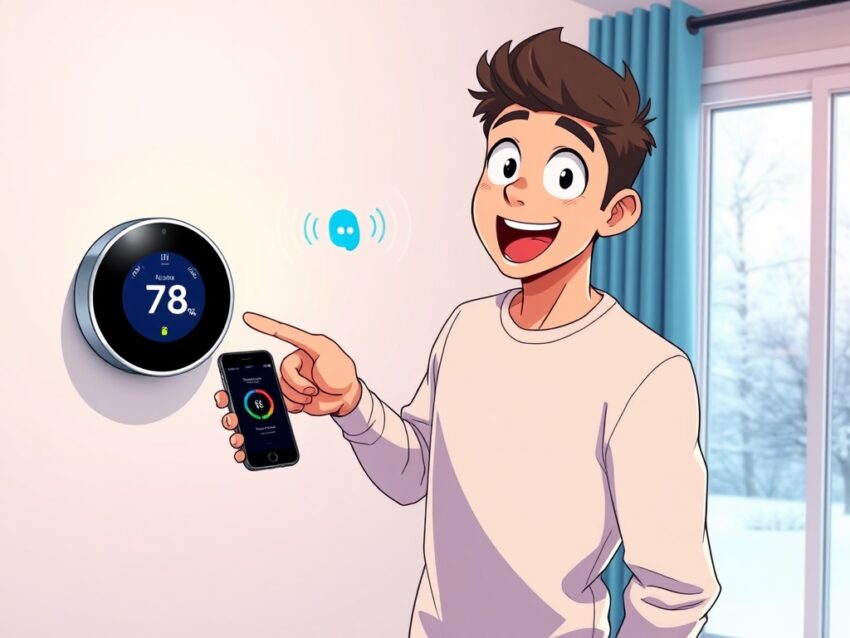
The Journey Begins: Why I Chose Smart Thermostats Compatible With Alexa And Google
I remember the moment when winter decided to wrap my apartment in an icy hug. Radiators did their best, but the warmth never came exactly when I wanted it. I’d rush home, craving comfort, only to find myself shivering, scrolling through my phone, dreaming of a smarter life. That was the day the world of smart thermostats compatible with Alexa and Google caught my attention.
You, my friends, have probably seen all those glowing reviews and influencer stories about smart homes. Maybe you’ve asked yourself: “Will my life actually become easier? Which devices won’t turn into just another dust catcher?” Today, I’ll talk you through my step-by-step journey — from confusion to that first, glorious voice-activated “Alexa, set the temperature to 22 degrees!” moment.
So, get comfortable. Let’s figure out together how to bring a slice of the future to your living room, connect your smart thermostat with Amazon Alexa and Google Assistant, and finally control your comfort with a single sentence.
Step 1: Understanding The Problem — And Defining Your Smart Needs
Let’s be real. Most heating systems are stuck in the past. The classic round thermostats judge you silently from the wall, demanding manual twiddling and endless guesswork. Here’s where a smart thermostat flips the script:
- You want voice control, smooth scheduling, and automated temperature tweaks.
- You want energy savings without the math headache.
- You want to check if you left the heat blasting when you’re already at work.
Before you even start looking at Amazon, take ten minutes to write down:
- What heating system do you have? Is it central, underfloor, radiator-based?
- Do you already own other smart home devices compatible with Alexa or Google? (A lonely Alexa Dot on your nightstand changes your options!)
- What’s your must-have? Geofencing? Room-by-room zoning? Budget-friendly? Sleek design?
I nearly made the rookie mistake of buying the hottest-rated thermostat, only to realize my old boiler needed extra hardware for compatibility. Lesson learned: a bit of prep saves a week of headaches.
Step 2: The Essential Features — What Makes A Smart Thermostat Worth It
Now, the jungle of choices on Amazon feels wild. Here’s my own curated list of features that actually matter for a smart thermostat designed to impress both Alexa and Google Assistant:
- Voice control (obviously!) — True support, so you can say “Hey Google, lower the temperature” without stutters or misfires.
- App control — Smooth smartphone apps that don’t lag or crash when you need them most.
- Geofencing — The thermostat tracks your phone, turning heat off as you leave, and back on when you head home.
- Learning algorithms — Some thermostats (think Nest Learning Thermostat) get to know your routine for automatic comfort.
- Energy reports — Yes, you’ll geek out as you see your kilowatt usage drop.
- Scheduling — Set daily routines right in the app, even if you live on the edge and plans change daily.
- Design — Don’t underestimate the power of a minimalist dial over a clunky rectangle on your carefully curated wall.
Quick tip: The voice assistant compatibility you crave isn’t always flawless. Check if “Works with Alexa and Google Assistant” is stated clearly in both the description and product Q&A on Amazon. User reviews will often tell you which assistant plays nice and which one throws a tantrum.
Step 3: Choosing The Right Model — My Top Picks (and Honest Thoughts)
Let me walk you through the big hitters, straight from personal tests and endless Amazon rabbit holes.
The Google Nest Learning Thermostat
- Pros: Learns your routine, looks like a piece of modern art, works with both Alexa and Google, solid energy reports.
- Cons: Price tag is hefty, and installation may need a C-wire or professional help if your system’s vintage.
- Personal vibe: I love how it felt almost alive, slowly adjusting as if it could sense my weekend laziness. The smartphone alerts when it noticed I’d left home floored me.
ecobee Smart Thermostat With Voice Control
- Pros: Built-in Alexa (so it can act as an extra speaker!), works with Google too, supports room sensors for tailored comfort, robust mobile app.
- Cons: Interface isn’t always the smoothest; getting all features to work together demands some patience.
- Personal vibe: The multi-room sensor setup was a gamechanger when my office (a furnace in the afternoons) needed different settings than the bedroom.
Honeywell Home T9 Smart Thermostat
- Pros: Reliable, great mobile integration, Alexa and Google compatibility, reasonable price, especially with bundles including room sensors.
- Cons: Lacks the “learning” magic of Nest; app updates occasionally break routines.
- Personal vibe: Feels sturdy and fuss-free. Good for anyone who wants reliability over trendiness. The scheduling is delightfully nerdy and exact.
Amazon Smart Thermostat
- Pros: Wallet-friendly, deeply integrated with Alexa, straightforward installation, simple design.
- Cons: No Google Assistant support (as of now), fewer advanced features, but excels at basics.
- Best for: If Alexa is your main smart home hub and you love Amazon’s ecosystem, this is seriously tempting.
Read the reviews. Compare user photos. Imagine how each unit will actually look on your wall, not just in glossy ads.
Step 4: Installation — What They Don’t Tell You On The Box
Let’s go full transparency: installing a smart thermostat isn’t always a “just stick it on the wall” job. Sometimes, like me, you stare at a tangle of wires and freeze. Here’s what I learned:
- Turn off the power before removing your old thermostat. Unless you want an impromptu live wire moment.
- Take a photo of the old wiring setup with your phone. It’s a lifesaver if you need to reconnect for any reason.
- C-wire required? Many modern devices need a “common wire” (C-wire) for steady power. No C-wire? You may need an adapter, which comes with some thermostats—or be ready to hire an electrician.
- Download the manufacturer’s app before starting physical installation. Most walk you through each step with photos or videos; some even offer live support.
- Don’t rush: Measure twice, drill once. There’s nothing worse than crooked tech on your wall.
When my anxiety peaked mid-install, I paused, brewed coffee, and called customer support. Turned out, I’d swapped two wires. Ten minutes and a bit of patience later — victory. Point is, even as a self-proclaimed tech nerd, I underestimated how much a steady hand helped.
Step 5: Setup, Pairing, And That First “Aha!” Moment
Thermostat in place? Power back on? Now comes the fun bit — getting it talking to Alexa and/or Google.
- Connect the device to Wi-Fi first using the app.
- Follow prompts in the app to link your Amazon Alexa or Google Assistant account.
- Give your thermostat a distinct name. Creative ones like “Cosy Central” make commands more fun: “Alexa, increase Cosy Central by 2 degrees.”
- Run test commands. I still grin remembering the moment Alexa chirped back: “Setting Cosy Central to 72°F.”
Don’t skip the voice training features if offered. With my slight accent, these tools helped ensure my commands weren’t lost in translation.
Many apps allow deep customization: assign rooms, set up automations (like “When I leave, turn everything off”), and link energy-saving modes with your home’s rhythms. I spent hours fiddling until every preference felt tailor-made.
Полезные материалы, шаблоны, пошаговые уроки по нейросетям и автоматизации в моем телеграм канале, ссылка в профиле

## Step 6: Living With Your New Smart Thermostat — What Changes And What Stays The Same
Day one with a smart thermostat hits differently. There’s a sense the home is listening, ready. The convenience is obvious — but what surprised me were the psychological shifts:
- I became way more aware of my energy usage. Weekly reports made saving a game, not a chore.
- Voice control replaced bickering over “who left the heat on!” Some romantic weekend mornings started with, “Hey Google, make it toasty.”
- Unexpected visitors (“Surprise! We’re outside in 5!”) stopped inducing panic. A quick app flick or shouted command, and the place was instantly welcoming.
BUT — let’s get real. Glitches can happen:
- Voice assistants occasionally misunderstand, especially if the thermostat’s name is too generic.
- Software updates sometimes break routines (thanks, Honeywell, for the 2 a.m. “unexpected error”).
- Sudden Wi-Fi drops may leave manual adjustment as your backup plan.
So, life improves, yes, but technology is never infallible. Patience keeps the magic alive.
Amazon Best Sellers Reviewed: Advantages, Drawbacks, And Hidden Gems
I spent weeks reading actual user reviews on Amazon, because glossy spec sheets only tell half the story. Here’s the inside scoop:
- Nest Learning Thermostat is beloved for its design and automation but dented by its cost and a sometimes finicky installation.
- ecobee shines in multiroom homes, with users praising additional sensors but grumbling about app updates and initial setup complexity.
- Honeywell T9 gets high marks for price-to-performance balance, yet reviewers note that deep customization requires a learning curve.
- Amazon Smart Thermostat is a darling for Alexa-centric users with simple needs, but if you own a mix of smart home devices, lack of Google support is a dealbreaker.
Key tip: Always read the 3-star and 4-star reviews. They usually spill the truth — not rants, not hype, but honest, tire-kicking opinions.
My Pro Tips For Success — And Avoiding Rookie Mistakes
- Start with compatible systems: Double-check if your heating setup matches the thermostat’s requirements. Boiler owners, especially in Europe, need to watch this closely.
- Use groups and routines: In Google Home or Alexa, set up routines. “Goodnight” lowers the heat in all rooms. “I’m home” welcomes you with a wave of warmth.
- Update often: Keep your devices’ firmware current. Delay, and voice assistant sync can glitch.
- Protect your privacy: Often overlooked, but double-check the privacy settings in the app. Decide what data gets shared and what’s strictly yours.
Conclusion: Should You Buy A Smart Thermostat Compatible With Alexa And Google?
After living with smart thermostats compatible with Alexa and Google across two apartments (yes, I moved — and yes, took my thermostat with me), here’s what I found: these gadgets truly change your everyday life. They bridge comfort, savings, and the wild satisfaction of controlling your home with a whisper.
If you:
- Value automation and crave voice control,
- Love tracking your home’s energy patterns,
- Want flexible routines and an intuitive app,
- Have an “always on” Wi-Fi setup,
then you’ll never look back after that first week. My top pick for design-driven users is still the Google Nest Learning Thermostat, while tech enthusiasts with sprawling homes might love ecobee’s room sensors. For pure Alexa fans wanting value, the Amazon Smart Thermostat fits snugly.
Remember, the key is matching features with your real-life rhythms. Tech is only smart if it makes your day easier.
Sometimes, I still catch myself pausing before stepping inside, waiting for that gentle, familiar warmth — and smiling, because now my home really knows what I love.
Полезные материалы, шаблоны, пошаговые уроки по нейросетям и автоматизации в моем телеграм канале, ссылка в профиле
html