Best LED Light Strips for Rooms and Setups on Amazon
A room can change its personality in less than five minutes.
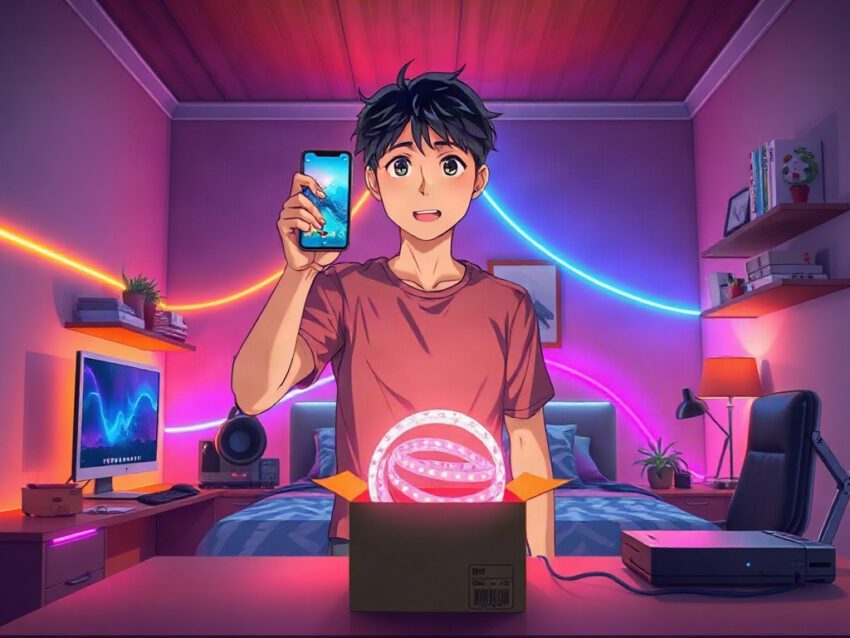
One moment, it is a plain rectangle with white walls, tangled cables, and a desk that looks tired after a long day. Then a soft amber glow appears behind the monitor. Blue light washes beneath the bed. Purple spills across the ceiling. Suddenly, the same space feels intentional—as if it has finally started telling the truth about the person who lives there.
Friends, that is the quiet magic of LED light strips. They do not merely brighten a room. They shape mood, define corners, make furniture look sharper, and turn an ordinary gaming setup, bedroom, dorm, or home office into a place with its own atmosphere.
Amazon currently offers thousands of LED strip light options, from inexpensive RGB kits to advanced smart strips with segmented colors, voice control, music synchronization, and adjustable white light.[1] The difficult part is not finding LED lights. It is choosing the right ones without getting distracted by dramatic product photos and suspiciously enormous lengths.
This guide focuses on the best LED light strips for rooms and setups on Amazon, including bedroom lighting, gaming desks, TV backlighting, cabinets, study spaces, and decorative room lighting. It also explains what the specifications really mean, which features matter, and where budget products often disappoint.
The goal is simple: help you buy lighting that feels good at midnight, works reliably after the novelty wears off, and does not peel off the wall three days later.
The best LED strip lights at a glance
Amazon’s current listings show several strong categories rather than one universal winner. Govee dominates the more feature-rich smart-lighting segment, while DAYBETTER and KSIPZE compete with affordable long-length RGB kits.[1][2]
- Best overall for smart room lighting: Govee RGBIC LED Strip Lights
- Best budget option for bedrooms: DAYBETTER RGB LED Strip Lights
- Best for large rooms: Govee 100-foot RGBIC strip or a comparable long-length kit
- Best for gaming setups: Govee RGBIC strips with app control and music synchronization
- Best for desks and shelves: Shorter 16.4-foot strips with Bluetooth control
- Best for smooth, dot-free illumination: COB LED strips
- Best for accurate white light: RGBW or RGBWW strips
- Best for TV backlighting: USB-powered LED strips sized to the television
- Best for voice-controlled homes: Govee models compatible with Alexa, Google Assistant, Matter, or similar smart-home platforms
- Best for simple decoration: DAYBETTER, KSIPZE, and other remote-controlled RGB kits
These recommendations depend on the kind of light you want. A teenager building a colorful gaming room does not need the same product as someone installing warm white lighting beneath kitchen cabinets. A 100-foot strip may sound like a bargain until you discover that you have nowhere sensible to hide the extra 60 feet.
Govee RGBIC: the strongest all-round choice
Govee has become one of the most visible LED strip brands on Amazon, and its popularity is not accidental. Its RGBIC strips typically offer app control, music synchronization, scene modes, segmented color control, and compatibility with voice assistants on selected models.[1][2]
The important word is RGBIC.
Traditional RGB strips usually display one color across the entire strip at a time. RGBIC technology can control multiple sections independently, allowing one part of the strip to glow blue while another shifts toward pink or orange. The effect looks more alive, especially behind a desk, around a wall, or along a ceiling.
Picture this: you are playing a racing game late at night. The screen flashes red as your car cuts across the track, while the light strip behind the monitor moves through red, violet, and electric blue. It is not essential. Of course it is not. But the room suddenly feels connected to the moment.
Govee’s 16.4-foot RGBIC model is a sensible choice for:
- A single desk
- A bed frame
- A bookshelf
- A television console
- A small bedroom wall
- A compact gaming setup
- A dorm room where long cables become annoying
The brand also sells longer options, including 100-foot kits designed for larger rooms and broad ceiling or wall installations.[1][3] Those products make sense when you want continuous decorative lighting around a room rather than a small accent behind furniture.
Why Govee stands out
- The mobile app offers more control than a basic infrared remote.
- RGBIC models can show multiple colors along one strip.
- Selected products support Alexa, Google Assistant, Matter, or other smart-home systems.[1][3]
- Music modes can react to sound from a phone or room.
- Scene presets make it easy to move from “focus” to “movie night” to “party.”
- The brand offers both inexpensive Bluetooth products and more advanced Wi-Fi models.
What to watch out for
Not every Govee strip has the same features. Some products use Bluetooth only, while others connect to Wi-Fi and support broader smart-home control. Some offer RGB color effects but limited white-light quality. Always check the exact model rather than assuming that every product in the brand’s catalog behaves the same way.
Also, app control is wonderful until you want to turn the lights off quickly. Keep the physical controller accessible. It is not glamorous, but nobody wants to search under a desk for a phone while already half asleep.
DAYBETTER: the practical budget pick
DAYBETTER appears repeatedly among Amazon’s best-selling LED strip lights, with affordable kits in lengths such as 50, 65.6, 100, 110, and even 200 feet.[2][5][7] These products commonly include RGB color-changing effects, remote control, app control, music synchronization, timers, and cuttable strips.
That combination explains their appeal. For the price of a casual takeaway meal, you can give an entire bedroom a new visual identity.
DAYBETTER is especially useful when:
- You want colorful decorative lighting without spending much.
- You need a long strip for a bedroom or living room.
- You are decorating a dorm or rental space.
- You want a beginner-friendly installation.
- You do not need highly accurate white light.
- You are lighting a party, gaming room, or temporary setup.
One evening, the strip might glow warm red during a movie. The next morning, you may choose a cooler blue-white setting while cleaning your desk. The light does not transform your life, but it changes the emotional temperature of the room—and that is often enough.
The strengths of DAYBETTER kits
- Low cost per foot, particularly in long-length packages.
- Broad availability on Amazon.
- Simple remotes for people who do not want to use an app.
- Common features such as music sync and timers.
- Suitable for decorative bedroom lighting and party setups.
- Cuttable designs on many models.
Amazon listings show DAYBETTER products with ratings around 4.3 to 4.4 stars and tens of thousands of reviews, although individual models vary and ratings can change over time.[5][7]
The limitations
Budget LED strips often compromise somewhere. The adhesive may weaken under heat or on dusty surfaces. The remote may require a clear line of sight. Color transitions may look less smooth than those on premium smart strips. White light may appear bluish, pinkish, or dull because standard RGB LEDs create white by mixing colors rather than using a dedicated white diode.
That does not make DAYBETTER a bad choice. It makes it a specific choice: excellent for atmosphere, less convincing as a serious task-lighting system.
KSIPZE and similar long-length kits
KSIPZE is another popular Amazon option for shoppers searching for long, inexpensive RGB light strips. A 100-foot KSIPZE kit appears among Amazon’s best sellers, with app control, remote control, music synchronization, and flexible installation for bedroom décor.[2]
These kits appeal to people who want maximum visual coverage. You can run the strip around a ceiling, along a wall, behind furniture, or across multiple sections of a room. The abundance feels exciting when opening the box. Then reality arrives: how do you route the strip cleanly around doors, windows, shelves, and corners?
Before buying a very long strip, measure the route rather than the room.
A 12-by-14-foot room has a perimeter of approximately 52 feet before accounting for corners, furniture, doorways, and power placement. A 100-foot product may cover the room, but extra material should not be folded into a tight bundle while powered. Plan where the strip will end, and check whether the product supports extensions or cutting.
KSIPZE makes sense for
- Large bedrooms
- Ceiling perimeter lighting
- Party décor
- First-time buyers
- Renters looking for inexpensive visual changes
- Setups where app and remote control are enough
Measure before you order
Write down:
- The length of each wall.
- The distance from the outlet to the first installation point.
- Areas blocked by doors or windows.
- Places where the strip must turn.
- The location of the controller.
- Whether the power cable can reach a convenient outlet.
The most common beginner mistake is buying by headline length. The second is assuming that a strip can make a perfect 90-degree bend without help. Most flexible tape lights can curve gently, but sharp folds can damage the circuit.
COB LED strips: the smoothest appearance
Conventional LED strips often reveal individual points of light when installed in an exposed location. You may see a dotted line beneath a shelf or along a wall. COB, or chip-on-board, LED strips place many light-emitting elements closely together to create a more continuous line of illumination.
Amazon’s newer and higher-end listings include COB RGBIC products with hundreds of LEDs per meter, as well as COB strips designed for warm white cabinet and furniture lighting.[4][6]
This matters when you want the strip itself to disappear and the light to remain.
COB strips are especially attractive for:
- Under-cabinet lighting
- Shelves
- Bookcases
- Headboards
- Desk edges
- TV units
- Architectural cove lighting
- Minimalist rooms
- Close-range installations where LED dots would be obvious
Imagine a wooden shelf at 10 p.m. A regular strip may look like a row of tiny stars stuck underneath it. A good COB strip looks more like a soft glowing edge. The difference is subtle, but subtle details often decide whether a room feels polished or improvised.
Some COB models also provide high color temperatures ranging from warm to cool white, while advanced Govee products advertise broad temperature adjustment and smart-home compatibility.[1][6]
COB is not automatically better
A COB strip may cost more. It may require a suitable power supply and careful mounting. Some models offer limited RGB effects or no color-changing function at all. Others are designed for low-voltage installations and should not be connected to an incompatible adapter.
Choose COB when the strip will be visible or when you want clean, continuous light. Choose a standard RGB strip when the strip will hide behind furniture and your main goal is colorful ambience.
RGB, RGBIC, RGBW, and RGBWW explained
The alphabet soup can make LED shopping feel like buying computer parts. Here is the useful version.
RGB
RGB stands for red, green, and blue. By mixing those three colors, a strip can create many decorative colors.
RGB works well for:
- Gaming rooms
- Parties
- Bedroom ambience
- Accent lighting
- Colorful wall effects
RGB is usually the most affordable option. Its weakness is white light. Mixed RGB white often looks artificial and is not ideal for reading, makeup, cooking, or detailed work.
RGBIC
RGBIC adds an integrated circuit that enables separate sections of the strip to display different colors. This produces animated gradients and multicolor effects.
RGBIC works well for:
- Gaming setups
- Music synchronization
- Dynamic wall lighting
- Streaming backgrounds
- Immersive room décor
The strip usually cannot be cut at every arbitrary point. Follow the marked cutting points carefully.
RGBW
RGBW adds a dedicated white LED alongside the red, green, and blue diodes. This generally creates more useful white light than color mixing alone.
RGBW is a better choice when you want both:
- Colorful ambience
- Practical white illumination
RGBWW
RGBWW includes a dedicated warm-white channel, and some products also offer cool-white adjustment. These strips are more flexible for rooms that need both relaxation and visibility.
Govee’s newer RGBWWIC products advertise adjustable white temperatures from very warm to very cool ranges, though the exact capabilities vary by model.[1][3]
Friends, ask yourself one direct question: Do you want light that looks exciting, or light that also helps you see? If the answer is both, do not automatically choose the cheapest RGB strip.
📢 Join Our Telegram Channel
Get real-time updates on new deals, price drops, and hidden tech gems.
⏰ Be first to see hot offers🛒 Direct links to products🎯 Focus on practical, useful tech

## The best LED strip lights for bedrooms
Bedrooms need a gentler approach than gaming rooms. The strongest color is not always the most comfortable one, especially when you are trying to wind down.
For a bedroom, consider a strip with:
- Dimming
- Timer schedules
- Warm white options
- App control
- Low brightness at night
- Reliable adhesive
- Quiet, unobtrusive power hardware
Warm white light around 2700K to 3000K usually creates a softer, more relaxing atmosphere than intense blue or cool white. Place the strip behind the headboard, beneath the bed frame, along a ceiling cove, or behind a dresser rather than directly in your line of sight.
A light source hidden behind furniture bounces illumination across the wall. The room glows without the LEDs shouting for attention.
A comfortable bedroom arrangement
- Install one strip behind the headboard or under the bed.
- Keep brightness between 10 and 35 percent at night.
- Use warm white, amber, or a slow color transition.
- Set an automatic shutoff after 30 to 60 minutes.
- Hide the controller behind a nightstand but leave it reachable.
- Avoid placing exposed LEDs directly above your pillow.
A friend once described her bedroom lights as “a sunset that never ends.” That is a better design goal than “the brightest possible color.” Good ambient lighting should support the room’s purpose, not compete with it.
The best LED strip lights for gaming setups
Gaming rooms reward movement, contrast, and synchronization. Here, RGBIC features can make a meaningful visual difference because multiple zones can react independently to music or in-game energy.
For a gaming setup, prioritize:
- RGBIC or individually addressable effects
- Music synchronization
- App scenes
- Brightness control
- Desk-friendly installation
- Cable management
- Compatibility with your smart-home system
- A strip length that matches the desk or wall
A 16.4-foot strip often works well behind a desk, monitor shelf, or bed. A longer kit can frame the room, but avoid covering every surface. If everything glows, nothing feels highlighted.
Try a three-layer lighting plan:
- Backlight: Put a strip behind the monitor or desk to reduce the harsh contrast between the screen and the dark wall.
- Room accent: Run a longer strip along the ceiling or behind shelving.
- Object accent: Light one shelf, display case, or PC cabinet rather than every item at once.
The result feels more deliberate. Your graphics card, figures, books, and controllers gain a stage instead of drowning in color.
Gaming color ideas
- Blue and violet for a cool, focused mood.
- Amber and red for a warmer cinematic atmosphere.
- Low-saturation green for a quieter late-night setup.
- Slow gradients for streaming backgrounds.
- Static warm white when working or studying.
A flashing rainbow mode may look impressive for six minutes. Then your eyes begin negotiating with your patience.
The best LED strip lights for desks
Desk lighting presents a practical challenge: the strip must look good from close range without producing glare on the monitor.
A shorter Bluetooth-controlled strip is often enough for a desk. Attach it behind the rear edge, beneath the tabletop, or behind the monitor stand. Avoid placing it where the LEDs face directly toward you.
For a clean desk installation:
- Wipe the surface with isopropyl alcohol and let it dry.
- Measure the exact route.
- Test the strip before removing the adhesive backing.
- Start near the controller or power connection.
- Press the strip down gradually rather than stretching it.
- Use clips at corners and high-stress points.
- Leave ventilation around the power adapter.
If you use a sit-stand desk, route the cable with enough slack for the full range of movement. Otherwise, the first time the desk rises, the cable will pull like a stubborn leash.
The best LED strip lights for TV backlighting
TV backlighting can make a screen feel larger and reduce the visual shock of a bright display in a dark room. USB-powered LED strips are convenient because many televisions include USB ports, although the port may turn off when the TV powers down.
Choose a strip based on:
- Television size
- USB or wall power
- Remote or app control
- Desired color temperature
- Whether the LEDs need to react to the screen
- The route around the back of the television
A simple USB RGB strip adds ambiance. A smart TV backlight system with a camera or HDMI synchronization offers more dramatic screen-matching effects, but it costs more and requires additional hardware.
Do not attach the strip directly to the visible front edge of the television. Install it on the back, a few inches from the edge, so the wall receives a soft halo instead of showing individual LED points.
The best LED strip lights for kitchens and cabinets
Kitchen lighting demands more than color. You need visibility, good placement, and sensible heat management.
For under-cabinet lighting, look for:
- Warm white or neutral white
- High color rendering, ideally a CRI of 90 or higher
- Dimming
- COB construction for smooth illumination
- A suitable low-voltage power supply
- A diffuser channel if the strip will remain visible
- Moisture resistance where appropriate
RGB strips can create a fun kitchen during a party, but they may render food and countertops poorly in everyday use. A dedicated warm-white or tunable-white strip often performs better.
Install the strip toward the front underside of the cabinet if you want to illuminate the work surface. Place it toward the back if you want a softer wall wash. Small decisions like this change where shadows fall.
Never assume that “water-resistant” means suitable for every kitchen location. Steam, splashes, grease, and cleaning products can degrade exposed adhesive and electronics. Keep controllers and connections away from sinks and wet surfaces.
What to look for before buying on Amazon
Product titles can overwhelm you with numbers: 5050, 2835, 24V, RGBIC, 65.6 feet, music sync, Alexa, cuttable, waterproof. Each term carries a different meaning.
Length
Buy enough length for the route, not the fantasy.
Common sizes include:
- 6.5 feet for shelves or small displays
- 16.4 feet for desks, beds, and compact rooms
- 32.8 feet for larger furniture arrangements
- 65.6 feet for room perimeters
- 100 feet or more for broad decorative installations
Longer is not always better. Extra strip may create voltage drop, brightness differences, or an awkward installation.
Voltage
Many consumer strips use 5V, 12V, or 24V power systems.
- 5V: Common in USB-powered strips and small installations.
- 12V: Widely used for home accent lighting.
- 24V: Often better for longer continuous runs because it can reduce voltage drop.
Use only the power supply specified for the strip. Never improvise with an adapter because the plug happens to fit.
LED density
LED density refers to how many LEDs appear within a given length. Higher density usually creates smoother light and fewer visible gaps, but it may also increase power consumption.
COB products take this further by placing light sources so close together that the strip appears nearly continuous.
Adhesive
Adhesive quality determines whether the strip remains on the wall after the first week.
Before installation:
- Dust the surface.
- Remove grease.
- Dry everything fully.
- Avoid textured walls when possible.
- Use mounting clips for ceilings and corners.
- Do not rely on adhesive alone for heavy or long installations.
Painted drywall, brick, wallpaper, wood, metal, and glass all behave differently. A strip that stays perfectly attached to a clean desk may fall from a textured wall before breakfast.
Smart-home compatibility
Check whether the exact model supports:
- Bluetooth
- Wi-Fi
- Alexa
- Google Assistant
- Apple Home or Matter
- SmartThings
- Remote control
- Local control when the internet is unavailable
A product may advertise “smart app control” without offering full voice integration. Read the specification panel rather than trusting the largest words in the title.
Cuttable design
Many LED strips can be cut, but only at marked points. Cutting elsewhere can destroy the remaining section or create an electrical hazard.
Some RGBIC strips have stricter cutting limitations because their controllers depend on specific segments. If you need unusual dimensions, confirm the product’s cutting and extension instructions first.
Installation mistakes that ruin good lighting
The most expensive LED strip can look cheap when installed carelessly.
Avoid these common errors:
- Applying the strip to a dusty surface.
- Bending sharply around corners.
- Hiding the controller where the remote cannot reach it.
- Letting the strip hang under its own weight.
- Overloading one power supply with extensions.
- Installing exposed LEDs where you can see every diode.
- Placing the power adapter in a sealed, hot space.
- Ignoring the direction of the strip and controller.
- Running cables across walkways.
- Using a decorative strip as the room’s only task light.
Test the whole system before mounting it. Turn it on for 20 minutes. Cycle through colors. Check the remote. Try the app. Confirm that the power cable reaches the outlet. This small rehearsal prevents the familiar late-night discovery that the final three feet are facing the wrong direction.
How to create indirect lighting
The easiest way to make LED strips look expensive is to hide the source.
Good locations include:
- Behind a headboard
- Behind a monitor
- Under a desk
- Behind a sofa
- Above a cabinet
- Inside a recessed shelf
- Along a ceiling edge
- Beneath a bed frame
The wall becomes the lampshade. Light spreads, shadows soften, and the room feels calmer.
If you must install a strip where the LEDs remain visible, use an aluminum channel with a diffuser. This protects the strip, improves heat management, and turns harsh points into a more continuous line.
Are cheap LED light strips worth it?
Sometimes, absolutely.
A $15 strip can deliver a remarkable amount of atmosphere. It can make a dorm feel personal, give a child’s room a playful edge, or transform a plain desk into a comfortable nighttime workspace. Amazon’s best-selling budget products demonstrate how much demand exists for inexpensive long-length RGB lighting.[2][5][8]
But cheap strips usually make the most sense for decorative lighting, not precision illumination.
Choose a budget kit when:
- You care mainly about color.
- The installation is temporary.
- The strip will remain hidden.
- You want a low-risk experiment.
- You are lighting a party or event.
- You accept basic control and average white light.
Spend more when:
- The strip will be visible.
- You need reliable white light.
- You want smooth segmented effects.
- You expect strong app integration.
- You are installing the lights permanently.
- You need better adhesive, construction, or support.
The cheapest option is not always the lowest-cost option. Replacing a strip, repainting a wall, or buying a second product after disappointment changes the calculation.
A simple buying formula
Before opening Amazon, write down three answers:
- Where will the strip go?
- What should the light do?
- How will you control it?
Then match the product:
- Bedroom ambience: warm white, dimming, timer.
- Gaming room: RGBIC, music sync, app scenes.
- Desk: 16.4-foot Bluetooth strip, indirect placement.
- Large room: 65.6- or 100-foot kit, careful measurement.
- Cabinet: COB or high-density warm-white strip.
- TV: USB-powered backlight sized to the screen.
- Smart home: Wi-Fi or Matter-compatible model.
- Temporary décor: inexpensive RGB kit with remote.
This approach prevents the classic Amazon mistake: buying the product with the most impressive title instead of the one that solves your actual problem.
Final recommendations
For most shoppers, Govee RGBIC LED Strip Lights offer the best balance of effects, app control, scene customization, and smart-home features. Their segmented color control makes them particularly strong for gaming rooms, bedrooms, and visually expressive setups.[1][2]
For a low-cost bedroom makeover, DAYBETTER LED Strip Lights remain a practical choice. Their long-length kits, remote controls, app features, and music modes offer plenty of atmosphere for relatively little money.[5][7]
For broad room coverage, KSIPZE 100-foot kits and similar long RGB strips make sense when you measure carefully and accept more basic construction.[2]
For shelves, cabinets, and refined installations, choose a COB LED strip or a high-density white-light model. Amazon’s current listings include smooth COB options intended for furniture, cabinets, bookcases, and decorative architectural lighting.[4][6]
And for a setup that must serve both mood and function, look beyond ordinary RGB. A strip with dedicated white LEDs—RGBW, RGBWW, or tunable white—will feel more useful when the excitement fades and you simply need to find your keys.
The right LED strip does not need to turn your room into a nightclub. Sometimes it only needs to place a quiet pool of amber light beneath the desk while rain taps against the window, the rest of the house sleeps, and you remember that even a small corner can become a place worth returning to.
📢 Join Our Telegram Channel
Get real-time updates on new deals, price drops, and hidden tech gems.
⏰ Be first to see hot offers🛒 Direct links to products🎯 Focus on practical, useful tech