Best Electric Toothbrushes With Smart Features: A Practical Guide To A Better Clean
Friends, a toothbrush used to be a wonderfully simple object. A handle, a few rows of bristles, perhaps a plastic cup beside the sink. You brushed for two minutes—or thought you did—and went on with your morning.
Now the bathroom mirror can become a coach.
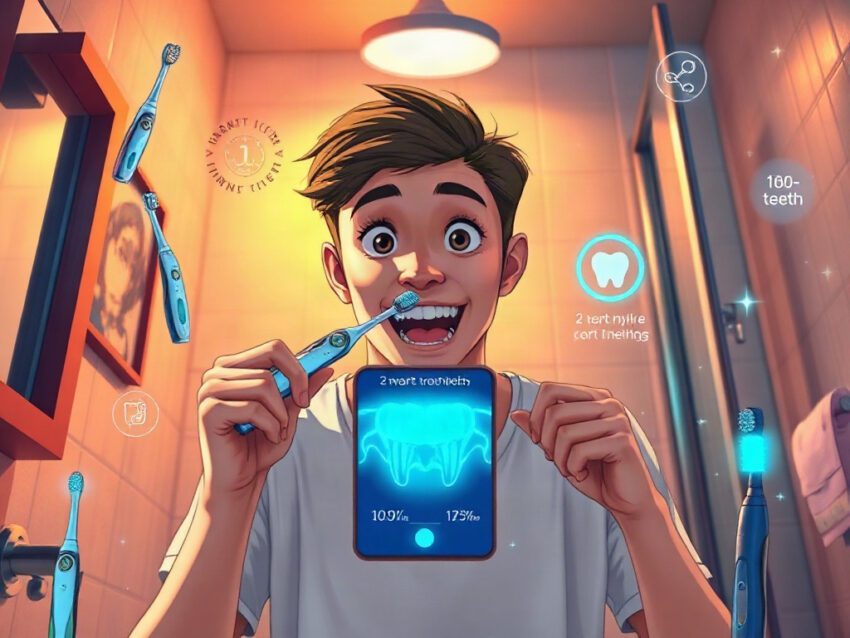
Modern smart electric toothbrushes measure pressure, track brushing time, map the areas of your mouth, and connect to smartphone apps that tell you where you rushed. Some even show live feedback while you brush. The result feels slightly futuristic: you stand in front of the mirror at 7:18 a.m., still half asleep, while a small motor quietly studies your technique.
That may sound excessive. Yet many people do not struggle with brushing because they lack good intentions. They struggle because they miss the same molars every day, press too hard, stop after 45 seconds, or move randomly from one tooth to another.
A smart toothbrush cannot replace a dentist. It can, however, turn an invisible habit into something you can see and improve.
Among current models, the Oral-B iO Series 9 stands out for its detailed app feedback and seven brushing modes, while the Oral-B iO Series 5 offers many of the essential smart tools at a lower price. The Philips Sonicare DiamondClean Smart 9300 is a strong option for people who prefer a quieter sonic brushing experience and real-time coaching.[1][2]
What makes an electric toothbrush smart?
A standard electric toothbrush usually offers a vibrating or rotating head, a timer, and perhaps a pressure sensor. A smart electric toothbrush adds sensors and software that interpret what happens during a brushing session.
In practical terms, smart features may include:
- Pressure detection that warns you when you press too hard.
- A two-minute timer with alerts every 30 seconds.
- Bluetooth connectivity that sends brushing data to an app.
- Mouth mapping that estimates which zones you cleaned.
- Personalized coaching for pressure, speed, duration, and coverage.
- Multiple brushing modes for sensitive teeth, gum care, whitening, or deep cleaning.
- Progress tracking that shows patterns over days or weeks.
- Handle displays or lights that provide feedback without requiring a phone.
The word “smart” does not automatically mean “better.” A brush can have a colorful screen, ten modes, and a beautifully designed app while still feeling awkward in your hand. The useful question is simpler:
Does the technology help you brush more effectively, or does it merely decorate the routine?
That distinction matters. A pressure sensor can protect sensitive gums. A coverage map can remind you about neglected back teeth. A complicated achievement system that makes you feel guilty after missing one evening may not help at all.
The best smart electric toothbrushes at a glance
| Model | Best for | Key smart features | Main drawback |
|---|---|---|---|
| Oral-B iO Series 9 | The most complete smart experience | Seven modes, pressure feedback, 3D tracking, app coaching, color display | Expensive handle and replacement heads |
| Oral-B iO Series 5 | Best balance of price and features | 3D tracking, pressure sensor, LED feedback, app support | Fewer premium extras than iO9 |
| Philips Sonicare DiamondClean Smart 9300 | Quiet sonic brushing and coaching | App feedback, pressure sensing, multiple modes, travel case | High purchase price and costly heads |
| Oral-B Genius X | Coverage tracking without buying the newest iO model | Smartphone tracking, pressure sensor, timer, app guidance | Requires more dependence on the phone |
| Quip Rev Smart | Affordable smart features | Bluetooth app, pressure sensor, four modes, long battery life | Less advanced tracking than premium models |
| Oclean X Pro Elite | A feature-rich alternative at a lower price | Handle display, app feedback, multiple settings, intensity control | Coverage detection may be inconsistent |
The right choice depends less on the number printed on the handle and more on your actual habits. Someone who regularly forgets the inside surfaces of the lower teeth may benefit from detailed tracking. Someone with sensitive gums may care more about a gentle pressure warning than a dozen brushing modes.
1. Oral-B iO Series 9: the most complete smart toothbrush
The Oral-B iO Series 9 is designed for people who want the toothbrush to explain what happened after every session. It combines a round oscillating-rotating brush head with pressure detection, a color display, several cleaning modes, and app-based brushing analysis.
Its standout feature is mouth tracking. The app divides the mouth into zones and shows which areas received enough attention and which areas did not. The toothbrush also monitors pressure, helping you recognize the difference between firm contact and aggressive scrubbing.
That difference can be surprisingly difficult to feel. Many people believe harder brushing means cleaner teeth. In reality, excessive pressure can irritate the gums and make brushing uncomfortable. The iO9 turns that hidden mistake into visible feedback.
The model includes seven modes:
- Daily clean
- Intense clean
- Gum care
- Sensitive
- Super sensitive
- Whitening
- Tongue clean
You may use only two of them. Most people probably will. But the range is useful if your needs change, especially when your gums feel tender or you are trying to create a gentler routine.
The companion app can also coach you through each session. It encourages you to spend enough time in different areas rather than polishing the same front teeth while ignoring the back of your mouth. Testers have praised the accuracy and usefulness of this feedback, particularly for people who want to improve technique rather than simply own an expensive gadget.[1][6]
There is something almost comical about being told by your toothbrush that you have neglected your upper-left molars again. Then the humor fades because the little device is often right.
Who should buy the Oral-B iO Series 9?
Choose it if:
- You want the most detailed brushing data.
- You often miss particular areas of your mouth.
- You like progress tracking and coaching.
- You want several specialized cleaning modes.
- You do not mind paying premium prices for the handle and brush heads.
Skip it if:
- You will never open the companion app.
- You want a quiet, minimalist routine.
- You prefer inexpensive replacement heads.
- You already brush carefully with a basic electric model.
A smart toothbrush becomes valuable when it changes behavior. If the iO9 stays in a drawer after the first week, its impressive technology has accomplished nothing.
2. Oral-B iO Series 5: the sensible middle ground
The Oral-B iO Series 5 offers many of the features that make the premium iO models appealing without pushing as far into luxury territory. It includes 3D teeth tracking, a smart pressure sensor, LED indicator lights, and app compatibility. A travel case also adds practical value for people who move between home, work, and weekend trips.[2]
The iO5 does not feel like a stripped-down toy. It still provides meaningful guidance, particularly around pressure and coverage. The pressure indicator is valuable for new electric-toothbrush users because the motor does much of the work; your hand does not need to force the head against every tooth.
Imagine changing from a manual toothbrush after twenty years. Your instinct may say, “Press harder.” The brush gently says, “Please stop.” That small correction can make the entire experience more comfortable.
The iO5 is a strong option for people who want smart features but do not need every premium convenience. It suits:
- Users who want app tracking without paying for the flagship model.
- People learning to control brushing pressure.
- Couples or families comparing different brushing habits.
- Travelers who want a compact case.
- Anyone who wants real-time guidance but prefers a simpler handle.
Its main limitation is that the app remains central to the most detailed feedback. Without your phone nearby, you still receive basic sensor and timer assistance, but you lose the deeper picture of where you brushed.
3. Philips Sonicare DiamondClean Smart 9300: best for a quieter sonic experience
Philips Sonicare approaches brushing differently from Oral-B. Instead of a small round head performing oscillating and rotating movements, Sonicare models use high-frequency sonic vibrations across an elongated brush head.
The DiamondClean Smart 9300 adds app-based coaching, pressure sensing, several modes, and a travel case. Reviewers have highlighted its relatively quiet operation and its ability to provide feedback when users press too hard or neglect certain areas.[2]
For some people, the sensation feels smoother. The brush does not seem to fight the teeth; it creates a fast, steady hum that reaches along the gumline. For others, the larger head takes time to master, especially around the back molars and narrow spaces.
The 9300 is a good fit if you appreciate:
- A quieter brushing experience.
- A sleek, restrained design.
- Real-time app coaching.
- Multiple modes for daily cleaning, whitening, or gum care.
- A premium travel setup.
The design also matters more than people expect. A toothbrush sits on the bathroom counter every day. You pick it up before work, after coffee, while the shower fogs the mirror. If the handle feels balanced and the controls make sense, you are more likely to use it consistently.
That sounds small. Habits are built from small things.
4. Oral-B Genius X: smart tracking without the newest flagship
The Oral-B Genius X remains appealing because it focuses on the central promise of a smart toothbrush: helping you clean areas you might otherwise miss.
It connects to a smartphone app and tracks which portions of the mouth you have brushed. It also includes a two-minute timer and an over-brushing sensor.[3] This combination covers the essentials without demanding the price of the newest premium iO models.
The Genius X may be particularly useful for people who brush on autopilot. You know the scene: the alarm has already gone off twice, the kettle is boiling, and your mind is composing an email while your hand moves around the mouth by memory. The brush keeps working, but attention disappears.
App tracking interrupts that autopilot.
It does not need to shame you. It simply gives you a visual record. You may discover that you spend almost half your brushing time on the front teeth because they are easiest to see, while the rear surfaces receive a rushed five-second visit.
A practical way to use the Genius X
For the first seven days, do not try to create a perfect score. Instead:
- Brush as you normally do.
- Review the coverage map after each session.
- Notice the areas you repeatedly miss.
- Change your route the next morning.
- Start with the neglected area rather than the most visible teeth.
- Compare the pattern at the end of the week.
This turns the app into a mirror rather than a judge.
5. Quip Rev Smart: the affordable entry point
The Quip Rev Smart Oscillating Toothbrush aims to make connected brushing less intimidating and less expensive. It includes Bluetooth connectivity, four brushing modes, a pressure sensor, and a two-minute timer with 30-second reminders. Its companion app tracks brushing and offers feedback on coverage and pressure.[5]
The Rev Smart does not provide the same depth of guidance as the premium Oral-B and Philips models. That is not necessarily a problem. Many people do not need a dental dashboard; they need a brush that reminds them to slow down, stay gentle, and finish the full session.
Its battery is one of its appealing practical features. A full charge can last for up to 30 days, depending on use and conditions, which means less time hunting for a charging cable beside the sink.[5]
The Quip Rev Smart makes sense for:
- First-time smart-toothbrush buyers.
- People who want app tracking at a lower price.
- Minimalists who dislike bulky premium handles.
- Travelers who value long battery life.
- Users who want simple reminders rather than detailed analytics.
One warning: affordable smart hardware can still create expensive ownership costs if replacement heads are difficult to find or overpriced. Before buying, check the current replacement-head price and availability. A toothbrush is not a one-time purchase; it is a small subscription you hold in your hand.
📢 Join Our Telegram Channel
Get real-time updates on new deals, price drops, and hidden tech gems.
⏰ Be first to see hot offers🛒 Direct links to products🎯 Focus on practical, useful tech

## How to choose smart features that actually matter
Shopping pages love long feature lists. “Eight modes,” “AI coaching,” “3D tracking,” “interactive display”—the words sparkle. But a useful buying decision begins with your habits, not the marketing vocabulary.
Ask yourself five questions.
Do you brush too hard?
If your gums feel sore, irritated, or tender after brushing, prioritize a reliable pressure sensor. The sensor should give feedback while you brush, not merely record the mistake for later.
Visual lights help, especially in a dim bathroom. Some models also change vibration or produce a sound when you press too hard. The best warning is the one you notice immediately and understand without checking instructions.
Try this test when you receive the brush:
- Place the head gently against your teeth.
- Increase pressure very slowly.
- Notice exactly when the warning appears.
- Return to the lighter pressure that keeps the warning off.
- Repeat the exercise on the front and back teeth.
Within a few days, your hand may begin to remember the correct pressure.
Do you miss certain zones?
If you rush through brushing, mouth mapping may help. Premium apps can divide the mouth into six, sixteen, or more zones and estimate whether each region received enough attention. Oral-B’s higher-end models are particularly known for detailed guidance and real-time feedback.[1][4]
The technology is not perfect. Movement tracking can become confused if you brush while walking around, hold the handle at an unusual angle, or move too quickly. Treat the map as a useful guide, not an unquestionable medical measurement.
A good routine still matters:
- Start with one side of the upper teeth.
- Move across the outer surfaces.
- Clean the inner surfaces.
- Finish with chewing surfaces.
- Repeat on the lower teeth.
- Give the gumline deliberate attention.
A route reduces decision fatigue. You do not have to wonder where to go next; you simply follow the path.
Will you use the app?
This is the most important question.
A smart brush may pair with an app beautifully during the first three days. You might explore the graphs, read the coaching tips, and admire your nearly perfect coverage map. Then life returns. Your phone is charging in another room. You are late. You brush without opening the app.
That does not make the purchase foolish. Many benefits remain on the handle: pressure warnings, timers, and mode selection. But do not pay a premium for app features you already know you will ignore.
Choose a brush with strong offline feedback if you prefer a quick routine. Choose detailed app coaching if you enjoy tracking habits and reviewing progress.
Do you have sensitive teeth or gums?
Look for:
- A sensitive or gentle mode.
- Adjustable intensity.
- Soft replacement heads.
- A responsive pressure sensor.
- A handle that does not force you to press.
Do not assume a “deep clean” mode is better for everyone. More intensity can feel satisfying, but a comfortable routine performed twice a day beats an aggressive routine that makes you dread brushing.
If your gums bleed regularly, your teeth hurt, or you notice recession, speak with a dental professional. A smart toothbrush can improve technique; it cannot diagnose the cause.
Do you travel often?
A charging travel case is convenient, but battery life matters just as much. Some models offer a case that charges the handle, while others require a separate cable or base. Check whether the charger works with your travel setup and whether the case fits replacement heads.
Travel creates strange compromises. At home, a glass charging cup may look elegant. In a hotel room, it becomes one more fragile object beside the sink. A compact USB charger may be less beautiful but far more useful.
Smart toothbrush features explained without the hype
Pressure sensors
Pressure sensors detect when you push too firmly. They may use lights, sounds, changes in vibration, or a combination of signals.
This is one of the most useful smart features because pressure is difficult to judge by feel. A person can brush aggressively for years without realizing that the “clean” sensation comes from irritation rather than improved hygiene.
The sensor works best when you respond to it immediately. Do not wait until the end of the session to review pressure data. Loosen your grip as soon as the warning appears.
Timers and quadrant reminders
Most recommended electric toothbrushes include a two-minute timer, often divided into four 30-second intervals.[1][2] These reminders encourage you to give equal time to different sections of the mouth.
The timer may seem basic, but basic does not mean unimportant. People routinely underestimate brushing duration. A rushed minute can feel like two minutes when you are thinking about the day ahead.
Try standing still for the complete cycle once. Notice how long two minutes actually feels. The discovery may be mildly embarrassing. It may also reset your expectations.
Coverage tracking
Coverage tracking uses motion sensors and software to estimate where the brush has moved. The app then creates a visual map of the mouth.
Premium systems can provide detailed guidance, but no tracking system perfectly sees every bristle. A map indicates movement, not a microscopic guarantee of cleanliness. It can tell you that you spent little time in a region; it cannot promise that every surface received ideal contact.
That distinction protects you from false confidence.
Brushing modes
Modes can be useful when they address a specific need. Sensitive mode may reduce intensity. Gum care may use a gentler pattern. Whitening mode may help polish surface stains, although it does not transform tooth color overnight.
More modes do not automatically mean better results. If you cannot explain why you are using a mode, choose daily clean and focus on consistency.
Battery life
Battery life is not glamorous, but it determines whether the brush fits your life. A device that needs constant charging becomes annoying quickly.
Compare:
- Full charging time.
- Expected days of use.
- Whether the travel case charges the handle.
- Charging-port type.
- Battery indicator clarity.
- Replacement or warranty policy.
A long-lasting battery helps travelers, shared households, and anyone who dislikes bathroom clutter. A fast charger helps people who forget to charge until five minutes before leaving.
Oscillating-rotating versus sonic brushing
The two major electric-toothbrush approaches feel different.
Oscillating-rotating brushes usually have small round heads that move back and forth and rotate around the tooth. Oral-B’s iO and Genius lines use this general format. The compact head can make it easier to focus on individual teeth and reach narrow areas.
Sonic brushes use high-frequency vibrations through a longer head. Philips Sonicare models represent this approach. The motion feels more sweeping and may appeal to people who prefer a smoother sensation.
Neither design eliminates the need for good technique. You still need to:
- Use gentle pressure.
- Follow the gumline.
- Reach the back teeth.
- Clean inner surfaces.
- Replace worn brush heads.
- Brush consistently.
When possible, try both styles in a store or borrow one from someone you trust. The best technology is the one you can tolerate and use correctly twice a day.
How much should you spend?
Smart electric toothbrushes range from affordable connected models to premium devices costing several hundred dollars. The handle price is only one part of the equation.
Calculate the ownership cost:
- Initial handle price.
- Replacement heads every few months, according to the manufacturer or dental advice.
- Charging accessories.
- Travel case.
- Warranty coverage.
- Availability of compatible heads.
A cheaper handle can become expensive if replacement heads cost more than expected. A premium handle may be worthwhile if it improves your routine for years. The key is not to chase the lowest price or the largest feature list; it is to find the point where useful guidance meets realistic ownership.
For many people, a mid-range model such as the Oral-B iO Series 5 offers a convincing balance. Those who want the deepest tracking may prefer the iO9 or iO10. People who prefer sonic brushing may look toward the Philips Sonicare DiamondClean Smart line. Budget-conscious buyers can consider the Quip Rev Smart or other models with basic Bluetooth coaching.[2][5][8]
A seven-day experiment for better brushing
Buying a smart toothbrush does not automatically create a smart routine. Try this simple experiment after choosing your model.
Day one: observe
Brush normally. Do not chase a perfect score. Let the app or handle show your natural pattern.
Day two: reduce pressure
Focus only on how firmly you hold the brush. Relax your fingers. Let the motor work.
Day three: follow a route
Begin on the upper right and move systematically rather than jumping around.
Day four: slow down near the gumline
Spend deliberate time where the tooth meets the gum. Avoid scrubbing back and forth.
Day five: correct your neglected area
Look at the previous sessions. Choose the zone you miss most and give it your attention first.
Day six: brush without the phone
Use only the handle’s timer, lights, and sensations. This reveals whether the brush remains useful without the app.
Day seven: review the pattern
Ask:
- Is pressure improving?
- Are you completing the full duration?
- Are the same areas still being missed?
- Does one mode feel more comfortable?
- Is the app helping or distracting you?
The goal is not a perfect graph. The goal is a better habit than the one you had a week ago.
Common mistakes when buying a smart toothbrush
Buying the most expensive model automatically
Premium models offer more feedback, but more feedback is not always more useful. If you want only a timer and pressure sensor, a flagship may be unnecessary.
Choosing by mode count
A list of ten modes looks impressive. Most people use one or two regularly. Give more weight to sensor accuracy, comfort, battery life, and replacement-head cost.
Ignoring the brush head
The handle gets the attention, but the head touches your teeth and gums. Check the shape, bristle firmness, availability, and price. A perfect handle cannot compensate for a head that feels too harsh.
Treating app scores as a diagnosis
A high score does not guarantee perfect oral health. A low score does not mean failure. Tracking systems estimate movement and pressure; they do not replace professional examination.
Pressing harder because the brush feels gentle
Electric toothbrushes often feel less dramatic than manual scrubbing. That is not evidence that they are ineffective. Give the motor time to work.
Letting the app become a source of guilt
A missed session is a missed session. It is not a moral crisis. The purpose of tracking is to help you return to the habit, not punish you for being human.
Final recommendations
Choose the Oral-B iO Series 9 if you want the richest smart experience, detailed coverage feedback, multiple modes, and a polished app.
Choose the Oral-B iO Series 5 if you want the essential smart features without paying for every flagship extra.
Choose the Philips Sonicare DiamondClean Smart 9300 if you prefer a quieter sonic brush with a premium feel and useful app coaching.
Choose the Oral-B Genius X if mouth tracking matters but you want an alternative to the newest iO range.
Choose the Quip Rev Smart if you want affordable Bluetooth features, a simple design, and long battery life.
Choose the Oclean X Pro Elite if you value a handle display, many settings, and a lower-cost route into smart brushing, while accepting that its coverage tracking may be less dependable than the strongest premium systems.[5][8]
Friends, the best electric toothbrush is not the one with the most impressive screen. It is the one that makes you slow down, soften your grip, reach the teeth you usually forget, and return tomorrow morning without a fight.
A small machine cannot give you discipline. But sometimes it can lend you a little attention—and attention, repeated twice a day, is how an ordinary routine begins to protect the future smile you have not yet seen.
📢 Join Our Telegram Channel
Get real-time updates on new deals, price drops, and hidden tech gems.
⏰ Be first to see hot offers🛒 Direct links to products🎯 Focus on practical, useful tech