
Best powerline and Wi‑Fi range extenders on Amazon: let’s make your Wi‑Fi stop sucking
Friends, let’s be honest: nothing breaks your flow faster than buffering at 3 a.m. when you’re halfway through a video or a ranked match.
The router is in the hallway, the dead zone is in your room, and your patience is somewhere in between.
So today we’ll go through the best powerline adapters and Wi‑Fi range extenders on Amazon, but in a way that actually helps you decide:
- What to buy
- For which apartment or house
- For what tasks: gaming, 4K streaming, work calls, smart home
We’ll mix real‑world logic, not just pretty numbers on the box.
powerline vs wi‑fi extender: which team are you on?
Before throwing brand names at you, we need one thing clear:
Wi‑Fi range extender
- Takes your existing wireless signal and repeats it farther[2][6].
- Works great for phones, tablets, laptops, smart home devices.
- Suffers more from walls, concrete, neighbors’ networks, and distance[2][8].
- Easy to move around, usually just plug it into an outlet mid‑way.
Powerline adapter
- Uses your home electrical wiring as a network cable[2][6][8].
- One unit near the router, another in the “dead” room.
- Often more stable and lower latency than a Wi‑Fi extender, if your wiring is decent[2][8].
- Great for PC, consoles, TV boxes, workstations.
In simple terms:
- If your problem is: “Wi‑Fi dies in the bedroom / kitchen / upstairs” → extender can help.
- If your problem is: “Ping jumps, online games stutter, Zoom lags, cable is impossible” → powerline is usually smarter[2][3][8].
Keep this in mind while we go through the top picks.
best powerline adapters on amazon (2025–2026 short‑list)
Different sites test these slightly differently, but there’s a strong overlap on models that are actually worth your money.
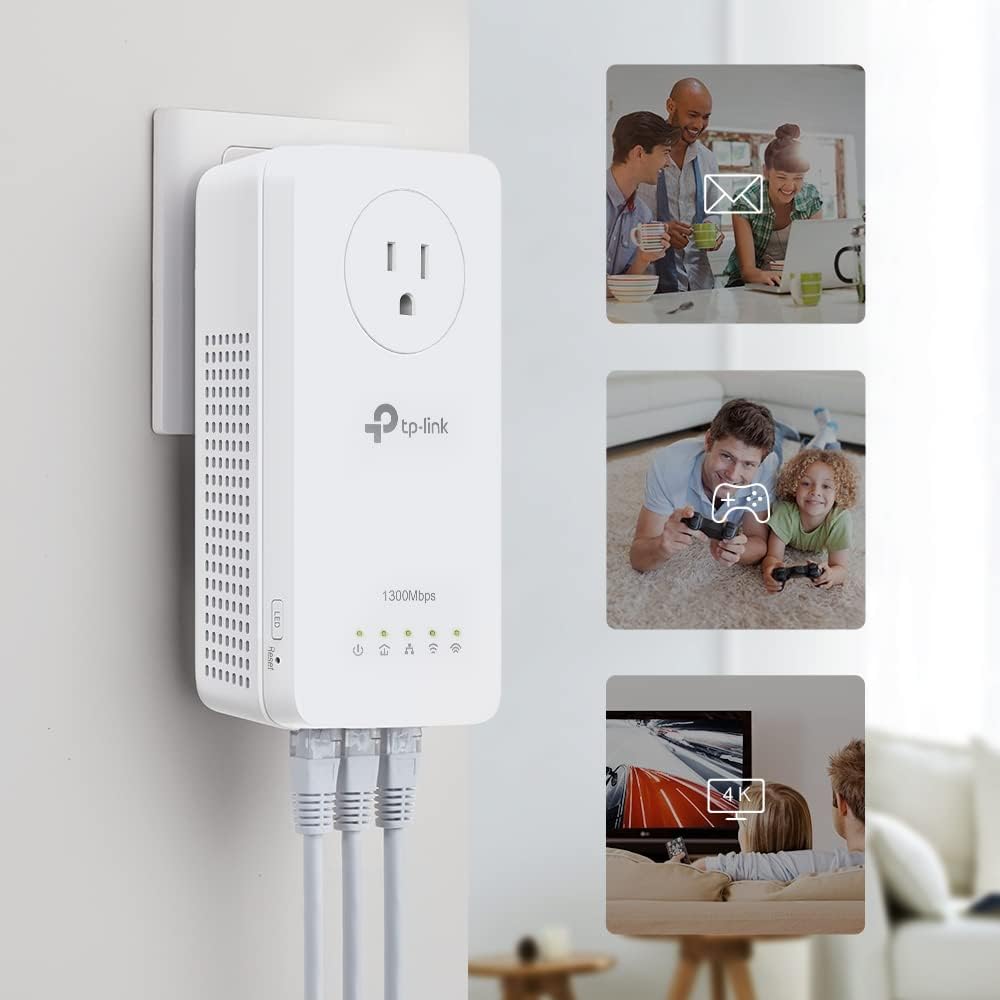
1. TP‑Link TL‑PA9020P – the “default answer” for most people
A lot of serious testers rank TP‑Link TL‑PA9020P as the best overall powerline kit thanks to a mix of speed, stability, and practicality[5].
Why it’s a safe choice
- Speed: up to 2000 Mbps theoretical (HomePlug AV2)[5].
- Ports: 2× Gigabit Ethernet on each adapter – perfect for PC + console, or TV + streaming box[5].
- Pass‑through outlet: you don’t lose a power socket; you plug the adapter in and then your power strip or lamp into it[5].
- Range: up to ~984 ft on paper, enough for big houses if wiring isn’t trash[5].
- No built‑in Wi‑Fi – it’s a pure wired solution.
Best for
- Gaming setups in another room.
- Serious home office where Wi‑Fi keeps dropping.
- People who don’t want to think too much: “just give me something that works.”
If your budget isn’t ultra‑tight and you want a reliable, Amazon‑friendly workhorse, this is usually it[5].
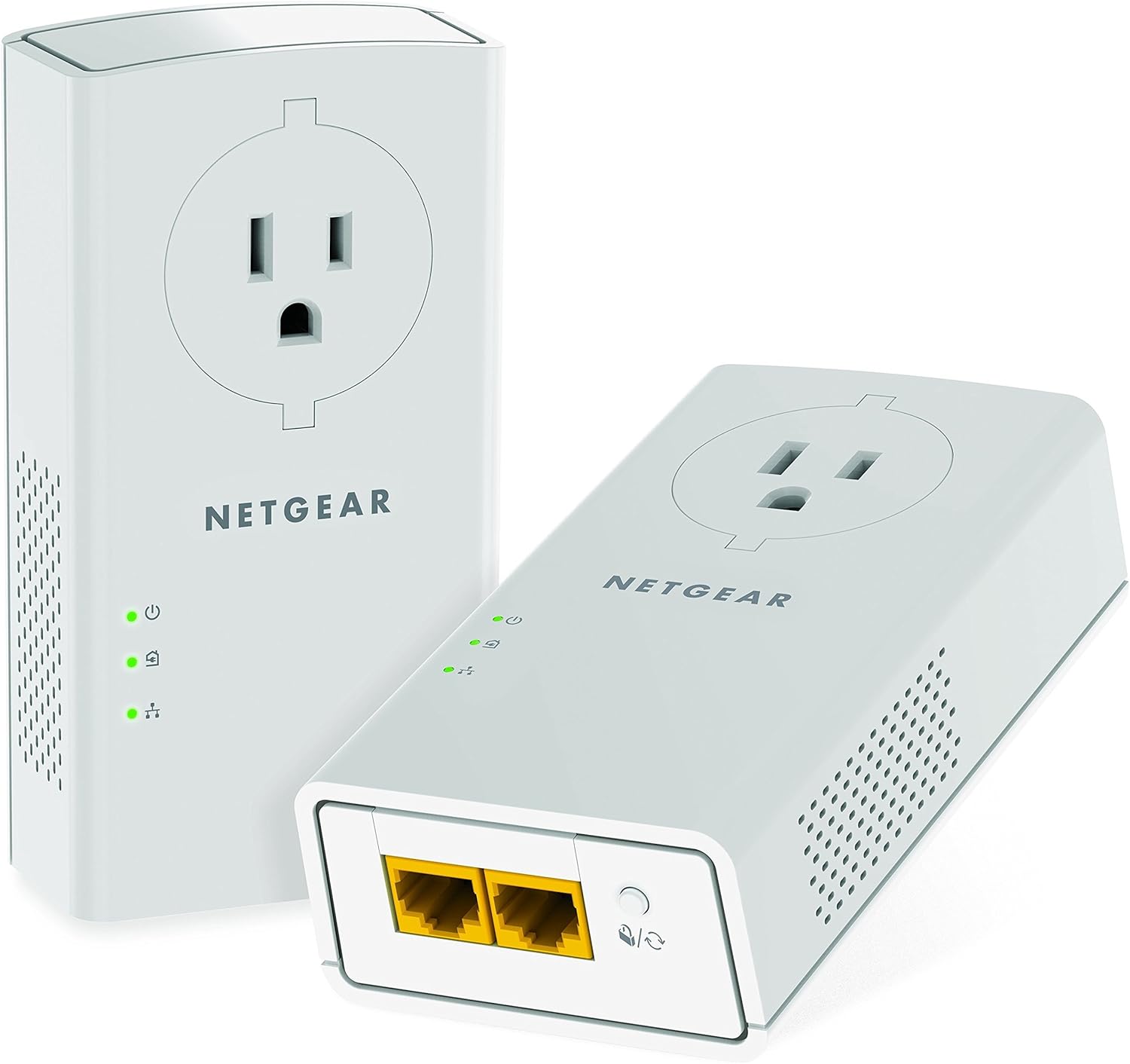
2. Netgear PLP2000 – powerful, long range, very “set and forget”
Tom’s Guide names Netgear PLP2000 as their top pick, noting excellent throughput and a range up to 775 ft in their tests[3].
Key points
- Speed: rated to 2000 Mbps.
- Ports: 2× Gigabit Ethernet[3].
- Pass‑through AC outlet: handy for cramped rooms[3].
- Real‑world performance: in testing it delivered the highest throughput among competitors while still covering a large distance[3].
Best for
- Detached garages, far rooms, long corridors where Wi‑Fi just dies.
- Streaming 4K, cloud gaming, heavy downloads far from router.
- Users who like Netgear’s ecosystem and apps.
If you’re looking at TP‑Link vs Netgear and prices are close, friends often choose by brand preference and design. Both are strong.
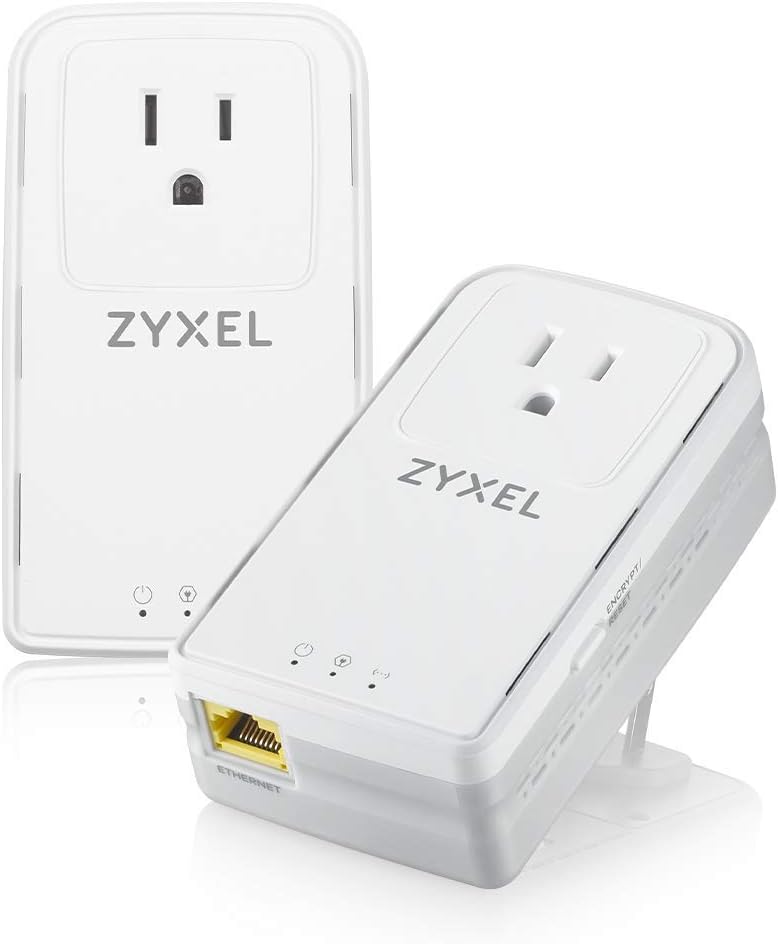
3. Zyxel PLA6456 / PLA5456 – when you want raw speed
HighSpeedInternet highlights Zyxel PLA6456BB as the “best for speed” with a theoretical max of 2400 Mbps[5].
Tom’s Guide also notes solid performance from Zyxel in their testing (PLA5456)[3].
Why it’s interesting
- Speed: up to 2400 Mbps on paper – top tier in powerline land[5].
- Usually 1× Gigabit port, which is enough for a single main device[5].
- No Wi‑Fi: again, this is about fast wired.
Best for
- One key device in a far room: gaming PC, console, smart TV.
- Users who care about raw throughput more than multiple Ethernet ports or Wi‑Fi.
Choose this when you know exactly: “I have one hungry device in that room and I want max speed via powerline.”
4. TP‑Link TL‑PA7017P – budget option that doesn’t suck
If money matters, but you still want something that doesn’t feel like a toy, TP‑Link TL‑PA7017P shows up again and again as best budget[5][7].
What you get
- Speed: up to 1000 Mbps (still plenty for most home internet plans)[5].
- Ports: 1× Gigabit Ethernet per adapter[5].
- Pass‑through power outlet: again, you keep your socket[5].
- Simple plug‑and‑play: connect, press pair, forget.
Best for
- Apartments with 100–500 Mbps internet where you just need stable wired access.
- Single device per room: PC, TV, NAS.
If you see it on Amazon at a good price, it’s a very easy buy.
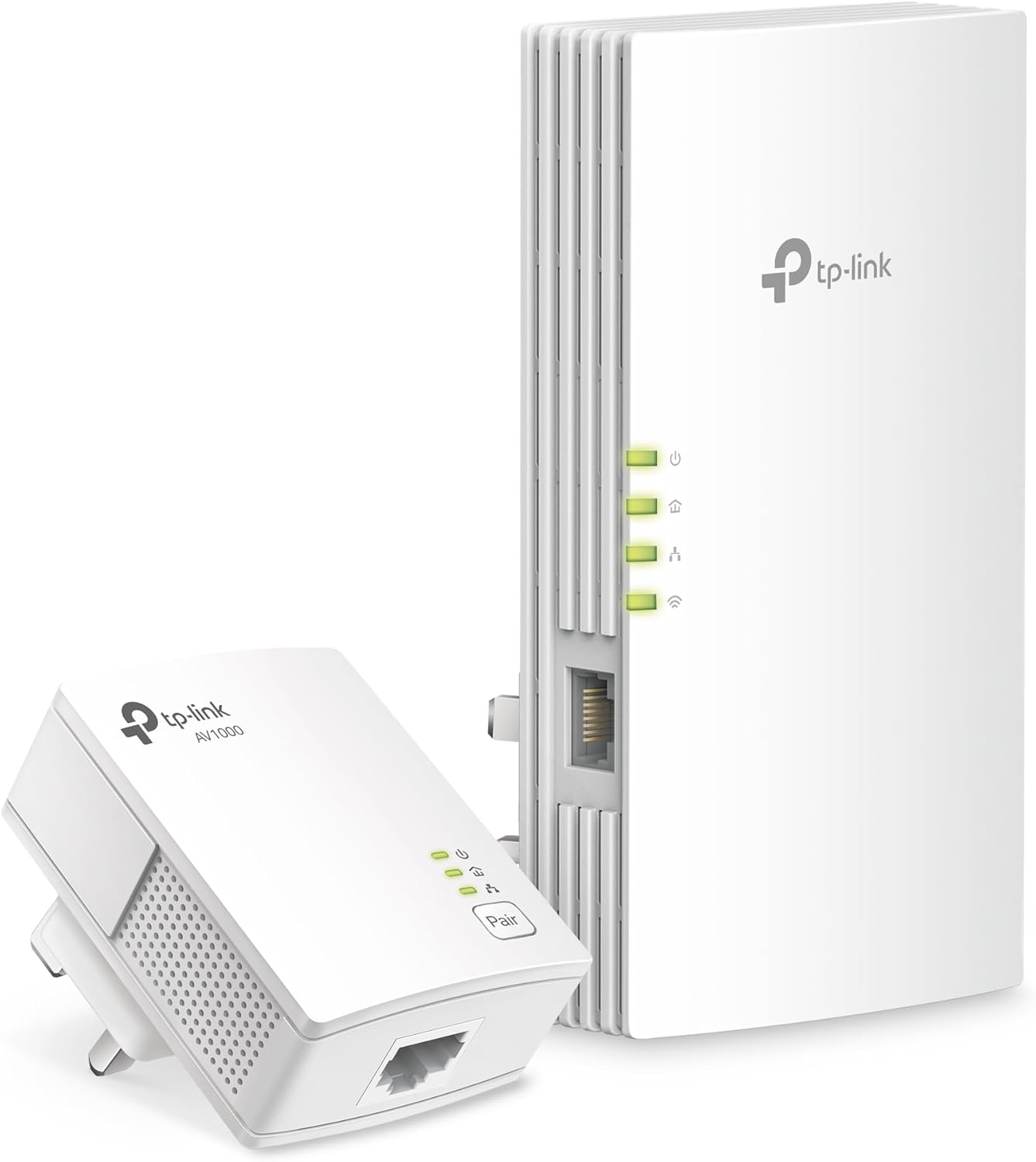
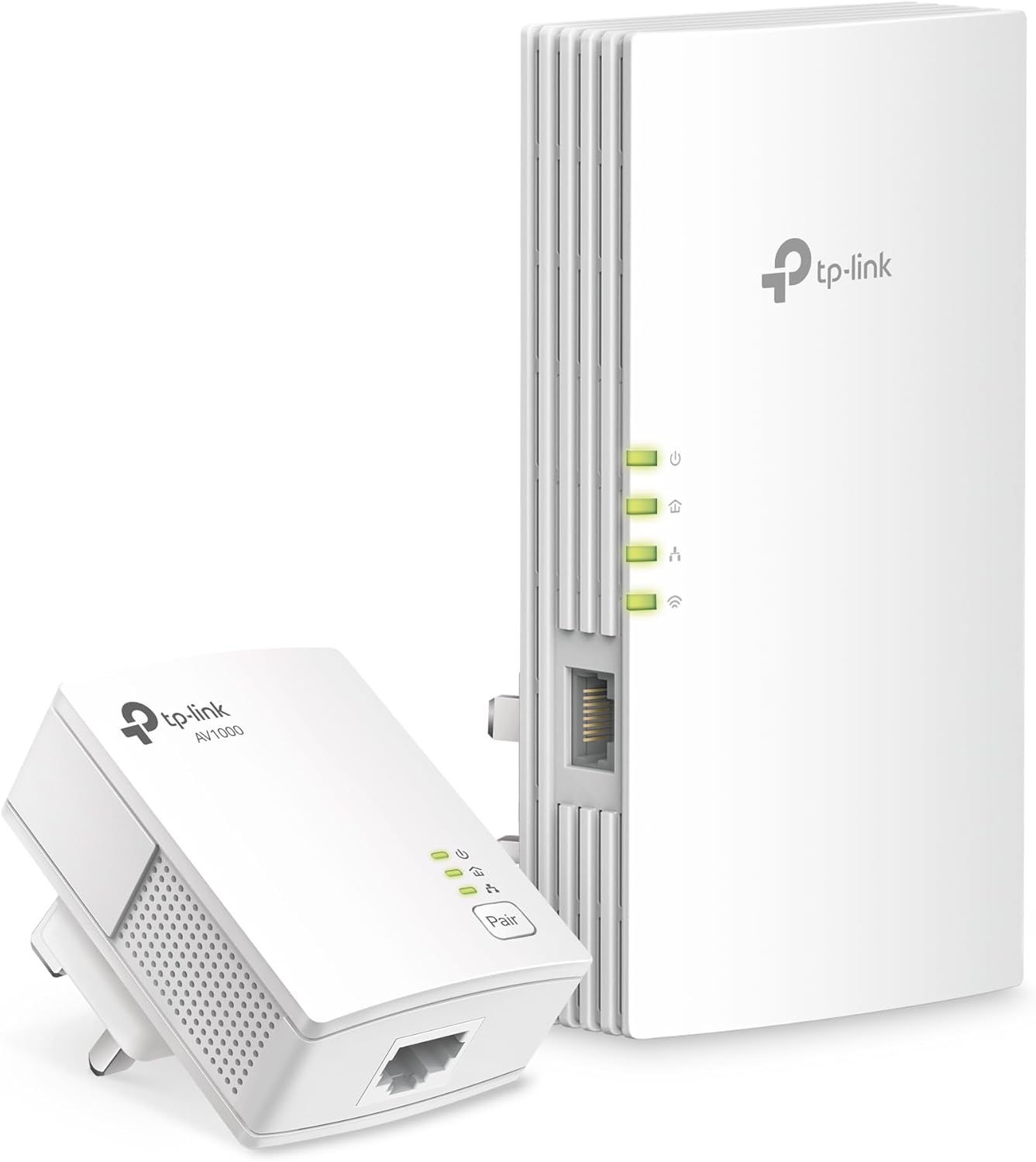
5. TP‑Link TL‑WPA7617 – powerline plus Wi‑Fi in one box
HighSpeedInternet calls TP‑Link TL‑WPA7617 the best for Wi‑Fi among powerline kits[5].
This one’s fun because it merges both worlds.
What’s special
- Uses powerline to bring the connection to the room.
- Then creates its own Wi‑Fi network there (plus Ethernet port for wired)[5].
- Up to 1000 Mbps over powerline, decent Wi‑Fi for phones and laptops[5].
So you get:
- Stable backbone via powerline.
- Convenient Wi‑Fi bubble in the target room.
Best for
- Rooms where you need both: one wired PC and multiple wireless devices.
- Multi‑floor houses where regular repeaters fail[8].
- Situations where router is on one floor, life is on another.
If you’re torn between powerline and repeater and want a hybrid, this is your sweet spot.
6. D‑Link DHP‑601AV – cheap and cheerful
Tom’s Guide notes D‑Link DHP‑601AV as a budget powerline extender with a still‑solid range of around 525 ft[3].
You’ll also see it in “top 7” videos and lists with very decent user feedback[3][9].
You should know
- Speed: up to 1000 Mbps.
- Ports: 1× Ethernet, no power pass‑through[3].
- Simple, minimalistic, often one of the cheapest “real” brands.
Best for
- Small apartments.
- People who just want to avoid Wi‑Fi drops on one desktop/TV without overthinking.
when powerline shines and when it doesn’t
Let’s drop the marketing talk and keep it human, friends.
Powerline is awesome when[2][8]:
- Your house has decent electrical wiring and not half‑century‑old chaos.
- The adapters are on the same electrical phase.
- Distance is reasonable (within a floor or two).
- Wi‑Fi is messy: lots of neighbors, thick walls, interference.
You usually get:
- More stable speeds than a distant Wi‑Fi extender[2].
- Lower latency for gaming and calls[2][3].
- Physical separation from wireless noise.
Powerline struggles when[2][8][10]:
- The house is very old or wiring is a Frankenstein of several renovations.
- Adapters sit behind surge protectors or fancy power strips.
- You mix phases, subpanels, long cable runs.
Some users report “only 100 Mbps” while Wi‑Fi hits 300 Mbps in the same home[10].
But those 100 Mbps can be rock‑solid, which for gaming or calls is often more important than peak numbers.
If you’re okay with experimenting a bit (changing outlets, moving them to different rooms), powerline can feel like magic.
If you hate tinkering, you might prefer a good Wi‑Fi extender or even a mesh system.
📢 Join Our Telegram Channel
Get real-time updates on new deals, price drops, and hidden tech gems.
⏰ Be first to see hot offers🛒 Direct links to products🎯 Focus on practical, useful tech

## best wi‑fi range extenders on amazon: when wires are not an option
Now, let’s switch brain modes.
Sometimes:
- You’re in a rental and don’t trust the wiring.
- You move devices around a lot.
- You mainly care about phones, tablets, smart speakers.
- Line of sight is decent.
In those cases, a Wi‑Fi extender / repeater can do great work[2][4][6][8].
how a wi‑fi extender really behaves in real life
According to tests and practical experiments:
- Extenders grab the existing Wi‑Fi signal, then repeat it farther[2][4][6].
- If they connect wirelessly to the router, they often halve available bandwidth and add some latency, especially through walls[2][8].
- If you can connect them via Ethernet (some support this), they basically behave like a small access point and perform much better[4][6].
On YouTube speed tests, you often see something like[4][6]:
- Direct ethernet: best speed, lowest ping.
- Good modern extender, line of sight: speeds close to direct[4][6].
- Powerline: slightly lower raw speed but still stable and usable[4].
- Badly placed extender through several walls: speeds tank, ping jumps[4][8].
So with extenders, placement is 50% of success.
choosing between extender, mesh, powerline: quick cheat‑sheet
Let’s keep it brutally simple.
If this is you:
-
“Small / mid‑size flat, just one dead room next door.”
- Try a Wi‑Fi extender first[2][8].
-
“Two‑storey house, concrete floors, Wi‑Fi upstairs is trash.”
- Go for powerline with Wi‑Fi (e.g., TL‑WPA7617) or eventually mesh Wi‑Fi[6][8].
-
“I’m a gamer / streamer, router is far, no way to pull Ethernet.”
- Try powerline (TL‑PA9020P, PLP2000, PLA6456)[2][3][5].
-
“Office at home, calls drop, VPN disconnects, but I can’t drill walls.”
- Also powerline, usually with two Ethernet ports for PC and dock[2][3][5].
-
“Tons of smart devices everywhere: bulbs, cameras, speakers.”
- Good extender or mesh system, possibly fed by a powerline backhaul if Wi‑Fi is awful[6][8].
seo angle: what people actually search for
Since we’re talking about “Best powerline and Wi‑Fi Range Extenders on Amazon”, let’s briefly touch what people tend to type into search:
Common queries:
- “best powerline adapter for gaming”
- “powerline vs wifi extender for 4k streaming”
- “tp link vs netgear powerline”
- “best budget powerline adapter on amazon”
- “best wifi range extender for thick walls”
- “extend wifi to garage / basement / upstairs”
- “how to fix wifi dead spots without ethernet”
If you’re writing or optimizing content, sprinkle in natural phrases like:
- powerline adapter for gaming / streaming
- Wi‑Fi range extender for large house / multi‑story home
- best powerline extender on Amazon
- HomePlug AV2 adapter
- Wi‑Fi 6 extender performance
But always wrap them in real, human explanations, not just lists of keywords.
how to place and tune your new extender or powerline kit
Even the best hardware can perform badly if treated like a random phone charger.
Powerline placement tips
- Plug adapters directly into wall outlets, not into surge strips or UPS units[2][8].
- Try to keep heavy noise sources (big motors, some LED dimmers) off the same outlet.
- If performance feels weak, test different sockets in the same room – sometimes another outlet is on a cleaner circuit.
- Don’t mix too many adapters in the same small area; start with 2, then add more only if needed[5].
Wi‑Fi extender placement tips
- Ideal spot: somewhere mid‑way between router and dead zone where signal is still decent, not already dying[2][8].
- Avoid putting the extender inside a cabinet, behind TV, next to microwaves.
- Use the device’s signal indicators (many have LEDs) or an app to find the sweet spot.
- Same SSID vs new SSID:
- Same name and password = smoother roaming, but can be confusing for troubleshooting.
- Different name = you clearly see which network you’re on and can compare.
real‑world scenarios: choose your setup
Let me throw some situations at you, friends.
Scenario 1: gamer in a rented apartment
- Router in hallway.
- Gaming PC in bedroom, two walls and a corridor away.
- Owner forbids drilling and visible Ethernet.
Likely best setup
- TP‑Link TL‑PA9020P or Netgear PLP2000:
- One adapter near router.
- Second in bedroom, cable to PC.
- Expect: consistent ping, fewer spikes compared to a weak Wi‑Fi extender[2][3][5].
Scenario 2: big family house, Netflix in every room
- Kids watching YouTube on tablets.
- Parents streaming 4K in the living room.
- One room upstairs always buffering.
Likely best setup
- Router on ground floor.
- Powerline with Wi‑Fi, like TL‑WPA7617, in the bad room:
- Powerline delivers backbone, local Wi‑Fi serves phones and TV[5][8].
- Maybe add a second unit later to another floor if needed.
Scenario 3: small studio, router in corner, bed in dead spot
- One room, but concrete pillar kills signal in half the space.
- You just need stable internet on laptop and TV.
Likely best setup
- Good Wi‑Fi extender, placed near the middle of the room with a clear line of sight[2][4][6][8].
- No need for powerline unless wiring is convenient and you’re picky about latency.
so, what should you buy first?
If we compress all of this into one simple hierarchy:
-
For reliable wired performance (gaming, work, streaming box):
- TP‑Link TL‑PA9020P
- Netgear PLP2000
- Zyxel PLA6456 (if you want max speed and one device)
-
For budget but still solid wired:
- TP‑Link TL‑PA7017P
- D‑Link DHP‑601AV
-
For rooms that need both Wi‑Fi and Ethernet far from router:
- TP‑Link TL‑WPA7617 or similar Wi‑Fi powerline kits
-
For purely wireless dead zones in small/mid flats:
- A decent Wi‑Fi extender, placed thoughtfully, often solves it faster than over‑engineering with cables.
In the end, it’s not about the brand name on the plastic, it’s about how your day feels:
No stutter in a work call.
No rubber‑banding in a match.
No frozen frames during a movie night.
When the connection just works, you stop thinking about routers and adapters and get back to living — and that, friends, is the whole point.
📢 Join Our Telegram Channel
Get real-time updates on new deals, price drops, and hidden tech gems.
⏰ Be first to see hot offers🛒 Direct links to products🎯 Focus on practical, useful tech
Our Pick
-17% $99.99
List Price: $119.99 |
-8% $110.00
List Price: $119.99 |
$79.99
|
-15% $84.98
List Price: $99.99 |
-15% $84.98
List Price: $99.99 |
|
|---|---|---|---|---|---|