Why High-Capacity External Hard Drives Matter: A Real-World Perspective
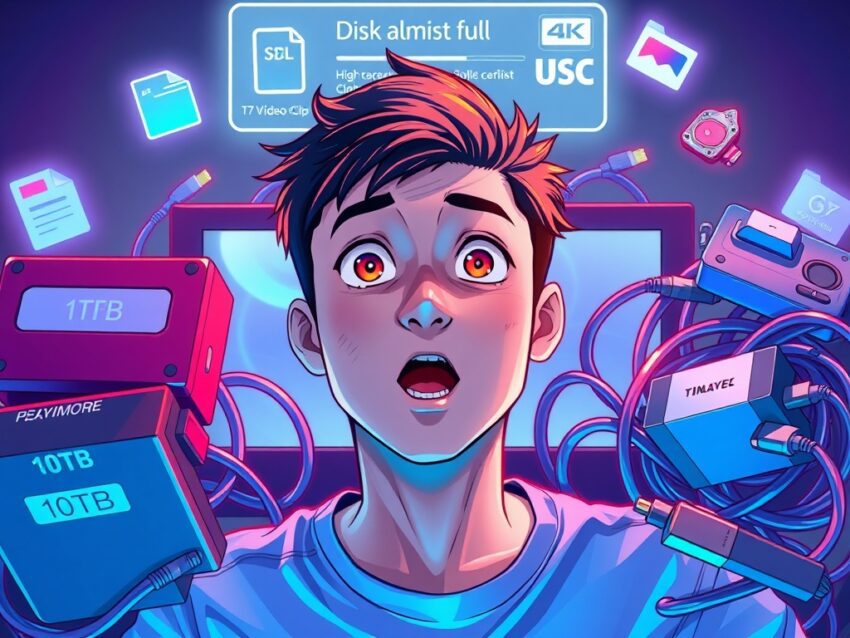
Let me paint you a picture. It's three in the morning. The only light in your room comes from your monitor, reflecting off the mug half-full of cold coffee nearby. You’re finishing a video project or maybe sorting out your endless stash of RAW photography files. Suddenly, that notorious, cold error message pops up: "Your disk is almost full." You freeze. Sound familiar, friends? Today, data is bigger—4K videos, sprawling game libraries, decades of family photos. Running out of storage space has become a digital rite of passage, a stumbling block we all hit eventually.
I’ve been there, and that’s precisely why I started hunting for solutions. I wanted reliability, massive capacity, fast transfer speeds, and—let’s be real—a price I could live with. So, the quest began: What are the top high-capacity external hard drives right now, and how do you pick the one that won’t let you down when it matters most?
Below is my in-depth, honest, and very personal journey into the world of external storage. If you’re looking for a truckload of storage that doesn’t fumble during crunch time, stick around. I’ve got stories, tips, Amazon product picks, and a few hard-won lessons to pass along.
What Really Counts When Choosing a High-Capacity External Drive?
1. Understanding Capacity: It’s Not Just About the Numbers
Let’s start with the obvious: Capacity. We see those seductive numbers—10TB, 16TB, sometimes even 20TB. Feels limitless, right? But pause. Ask yourself: What are you storing? Are you a gamer with a sea of AAA titles? A creative with entire documentaries tucked into folders? Or, maybe you’re backing up years of business data?
For myself—a photographer-videographer hybrid—it’s not just about having terabytes. It’s about knowing exactly how many RAWs, final edits, or music libraries fit before I start the toe-curling process of “what do I delete now?”
Pro tip: It’s usually smarter to buy more than you need right now. Data grows fast. Like, ridiculously fast. Two terabytes for family photos? Laughable ten years from now. Plan for future you.
2. Types of External Hard Drives: HDD or SSD—Which Is Your Match?
Let’s get technical for a sec. There’s HDD (Hard Disk Drive) and SSD (Solid State Drive). You’ve heard the terms, but here’s what I learned the hard way:
-
HDDs: They’re the tanks—reliable, high-capacity, and more affordable. Yes, they’re slower (especially with massive file transfers), but for storing archives, backups, or footage you don’t access daily? Brilliant.
-
SSDs: Whisper-quiet, lightning fast, less prone to drops and shakes. But … exponential cost as capacity rises. If you’re editing 8K video straight from the drive, or need warp-speed backups for gigs on the move, the SSD route is gold—if your wallet agrees.
Here’s a moment of honesty: I use a combination. True story—I’ve got 18TB of HDD cold storage on my desk and a rugged SSD that rarely leaves my backpack.
3. Connection Interfaces: Why Speed (and Compatibility) Matters
Let’s talk connections. USB-A, USB-C, Thunderbolt—what’s the difference? Way more than you think.
-
USB 3.0 and 3.1: Most consumer HDDs come with these. Speeds up to 5-10 Gbps. Fast enough for backups and big files, but you’ll still wait for those monster directories.
-
USB-C: Smaller, reversible, and found on most new drives and laptops. Just make triple-sure your ports match before you check out.
-
Thunderbolt: The Ferrari of connections. Blistering speeds (up to 40Gbps). Pro-grade gear. Can be expensive and sometimes overkill for casual backups.
One night, I found myself buying a new cable at 24/7 store because I hadn’t checked what my laptop’s port supported. Don’t be that person!
4. Portability vs. Reliability: What’s At Stake?
Some of you want a drive that lives on your desk, quietly backing up Netflix-worthy content. Others—maybe the nomads and digital warriors among us—need rock-solid drives that survive airports, subway seats, life in a backpack.
-
Desktop external drives: Bulky, need external power, but offer gigantic capacities (think 12TB, 18TB, even more).
-
Portable drives: Run on USB, fit in a jacket pocket, but usually top out at 5TB or so (unless you splurge on SSDs).
Here’s my tip: If you know your drive will see a lot of movement, choose SSDs or rugged models (think “can survive a fall from my desk”). If you’re building a home server, go with big, reliable desktop HDDs.
5. Longevity and Warranty: Because Drive Failure Is Real
Let’s get uncomfortable for a second. Hard drives fail. Sometimes in a year, sometimes after five. I don’t care whose logo is on it—eventually, it’ll die. That means two things matter:
- Brand reputation and real-world reviews.
- Warranty length, especially if you plan to use the drive for mission-critical backup.
On Amazon, I always scroll right down to “one-star reviews” for tales of failure and warranty headaches. It’s like a chilling campfire story, but sometimes it saves you hundreds of dollars.
📢 Join Our Telegram Channel
Get real-time updates on new deals, price drops, and hidden tech gems.
⏰ Be first to see hot offers🛒 Direct links to products🎯 Focus on practical, useful tech

## A Hands-On Look: My Top High-Capacity External Hard Drive Picks
Now, onto the juicy part. What actually works? Which of these monsters should you pick from an endless sea of Amazon listings, overwhelming specs, and glossy product photos?
6. WD Elements Desktop Hard Drive (12TB–18TB): The No-Nonsense Champion
If you’re after pure, wallet-friendly terabytes, this is my go-to. I’ve used WD Elements for years. The 18TB model sits by my desk humming away, unflinching, as it backs up terabytes of family memories.
Features:
- USB 3.0 interface (plug-and-play with almost everything).
- Massive capacities at a price-per-gigabyte that’s hard to beat.
- Simple, no-frills design.
Pros:
- Incredibly reliable for backups and bulk storage.
- Runs cool and quiet.
- Excellent price for huge capacity.
Cons:
- Not a speed demon—don’t expect SSD performance.
- Bulky, requires external power.
Best For: Home office, photography backups, storing media libraries.
7. Seagate Expansion Desktop/Portable (10TB–20TB): Reliable Workhorse
Another heavy hitter. I’ve gifted Seagate Expansion drives to friends and family who needed to wrangle their chaos of files. The portable line, especially the 5TB, is a sweet spot for tossing in your bag.
Features:
- Capacities up to a jaw-dropping 20TB (desktop version).
- Plug-and-play for Windows; simple setup for Mac.
- Both desktop and portable versions available.
Pros:
- Consistent speeds for an HDD (USB 3.0).
- Good thermal management.
- Widely available on Amazon with frequent sales.
Cons:
- Plastic chassis can feel a bit fragile on portable models.
- Some users report early failures—warranty support matters.
Best For: Creators, students, anyone who needs big space on a low budget.
8. LaCie Rugged RAID Shuttle (8TB): Adventurer’s Friend
Do you travel? Drop things? Fear airport baggage handlers? LaCie Rugged drives laugh at abuse.
Features:
- Distinctive orange bumper design, built to survive drops and dust.
- RAID support (mirroring or striping for safety or speed).
- USB-C & USB 3.0 compatibility.
Pros:
- Peace of mind for travelers and fieldwork.
- RAID flexibility—mirror mode means you never lose a wedding shoot again.
- Striking look (my friends ask about it, every time).
Cons:
- On the pricier side.
- Bulkier than plain-Jane portable drives.
Best For: Photographers, filmmakers, the eternally clumsy.
9. SanDisk Professional G-DRIVE (12TB–22TB): Built for Power Users
This isn’t just a hard drive, it’s almost a home appliance. I bought this for a multi-cam documentary edit project—22TB felt surreal.
Features:
- Enterprise-class HDD inside, Thunderbolt 3 or USB-C connectivity.
- Aluminum chassis for excellent heat dissipation.
- High sustained transfer speeds.
Pros:
- Ultra-reliable for editing 4K or 8K video directly.
- Whisper-quiet operation.
- Up to 5-year limited warranty.
Cons:
- Premium price tag.
- Not really portable.
Best For: Pros, production studios, serious data hoarders.
10. Samsung T7 Shield SSD (1TB–4TB): Not Huge, But Blazing Fast
You might think: 4TB isn’t much compared to those 18TB behemoths. True—but sometimes, speed beats sheer volume. For game libraries and live editing, SSDs like the T7 Shield are clutch.
Features:
- Up to 4TB, USB 3.2 Gen 2.
- Water and dust resistant.
- Shock resistant body.
Pros:
- Fits in your palm.
- Transfers 100GB videos in minutes.
- Rugged design, travel-friendly.
Cons:
- $$$—price climbs quickly with capacity.
- Topped out at 4TB (for now).
Best For: Gamers, digital nomads, fast backups on the run.
📢 Join Our Telegram Channel
Get real-time updates on new deals, price drops, and hidden tech gems.
⏰ Be first to see hot offers🛒 Direct links to products🎯 Focus on practical, useful tech
html